logo-01.8315cd3f.png&w=256&q=75)
Kenya's music scene is exploding. From Gengetone to Afrobeats, from gospel to electronic, Kenyan artists are reaching global audiences — and behind every hit song is a music producer. The producer shapes the sound, arranges the instruments, records the performances, mixes the tracks, and masters the final product. It is one of the most creatively fulfilling and financially rewarding careers in the creative industry.
If you want to be the person behind the hits, you need proper training. Here is everything you need to know about music production courses in Kenya — what you will learn, the studios you will train in, what it costs, and where it can take you.
What You Learn in a Music Production Course
A comprehensive music production programme covers the entire journey from idea to finished, release-ready track:
Music Theory and Composition
Understanding melody, harmony, rhythm, chord progressions, and song structure. You do not need to be a classically trained musician, but you need to understand how music works to produce it effectively. This foundation helps you communicate with artists, arrange songs, and make creative decisions that elevate the music.
Digital Audio Workstations (DAWs)
You will get hands-on training with the software that professional producers use every day:
FL Studio — hugely popular in Kenya and across Africa for beat-making and electronic production. Known for its intuitive step sequencer and pattern-based workflow
Ableton Live — the tool of choice for electronic music, live performance, and experimental production. Excellent for creating loops, samples, and live DJ sets
Logic Pro — Apple's professional DAW, widely used in Kenya's recording studios. Offers excellent built-in instruments and effects
Pro Tools — the industry standard for professional recording studios worldwide. If you want to work in a commercial studio, Pro Tools proficiency is essential
Recording Techniques
How to record vocals, live instruments, and ensemble sessions in a professional studio environment. You learn microphone selection and placement, gain staging, monitoring, and how to get clean, professional recordings — skills that separate amateur productions from commercial releases.
Mixing
Mixing is where a song comes together. You learn to balance levels, apply EQ and compression, add effects like reverb and delay, and create spatial depth and width. A well-mixed track sounds polished and professional on any playback system — from earbuds to club speakers.
Mastering
The final stage before release. Mastering ensures your track sounds consistent and competitive on Spotify, Apple Music, YouTube, and radio. You learn loudness standards, stereo enhancement, final EQ adjustments, and format delivery for different platforms.
Music Business
Understanding the business side is critical for a sustainable career. You cover publishing, royalties, distribution (DistroKid, TuneCore, CD Baby), licensing, sync deals, and how to monetise your music across multiple revenue streams.
Let's be honest. You can watch YouTube tutorials for years and still not know how to run a professional recording session. There's a difference between understanding mixing in theory and actually sitting behind a console with an artist waiting for you to get the sound right. That pressure — and the skill to handle it — only comes from hands-on training.
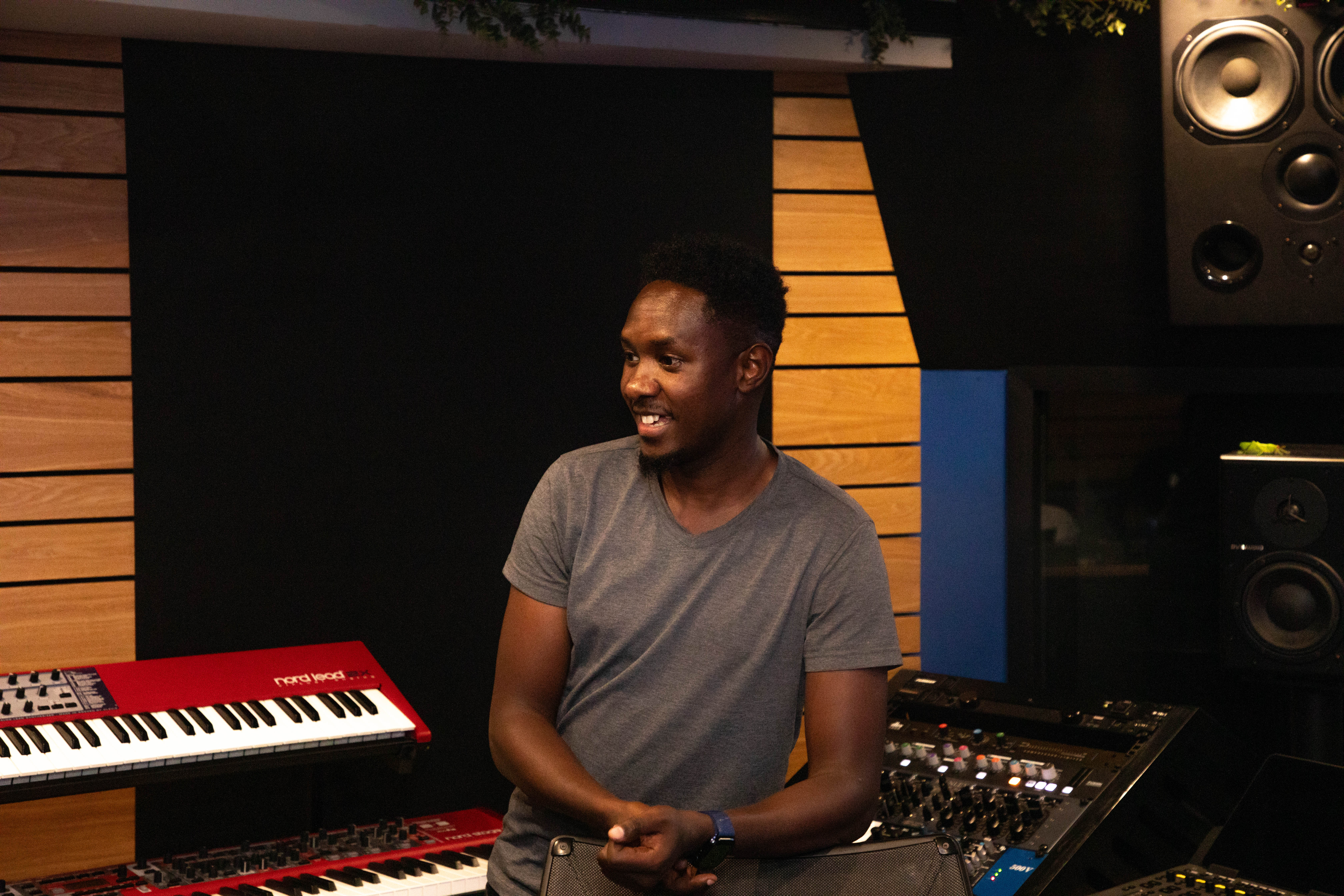
ADMI's campus in Nairobi CBD has five professional recording studios — not classrooms with speakers, but actual studios with Pro Tools HD systems, calibrated monitors, and proper acoustic treatment. Since 2012, over 3,000 creatives have trained here. And when Microsoft chose where to place its third Kenyan AppFactory — a skills lab that's achieved 85% graduate employment — they chose ADMI.
"We have a lot of kids from the slums and you see the transformation in one year," says founder Wilfred Kiumi in a BBC interview. "They start getting gigs, dressing better, they change and they start hanging out with people who can develop their career."
Music Production Programmes at ADMI
Diploma in Music Production (18 months)
The Music Production Diploma at ADMI is a comprehensive programme that takes you from beginner to professional producer. You train in professional recording studios with industry-standard equipment, learning from producers who have worked with top Kenyan and international artists.
Key features:
ECTS-accredited diploma with ECTS credits via Woolf — internationally recognised
Professional studio access throughout the programme — mixing consoles, outboard gear, professional monitors
Small class sizes with personalised mentorship from working producers
Industry placement opportunities — work alongside professionals during the programme
Comprehensive curriculum covering production, recording, mixing, mastering, and music business
May and September intake dates each year
Certificate in Music Production and Sound Engineering (6 months)
For those who want a focused, shorter pathway, the Music Production and Sound Engineering Certificate covers essential skills in 6 months. This is ideal for:
University graduates looking to add practical production skills
Working musicians who want to produce and record their own music
DJs who want to transition into original music production
Anyone testing whether music production is the right career path
Studios and Equipment at ADMI
At ADMI, you do not learn on laptop speakers in a classroom. The campus features professional recording studios equipped with:
Pro Tools HD systems — the same systems used in top commercial studios worldwide
Professional mixing consoles — analogue and digital boards for hands-on mixing experience
Studio monitors — calibrated speakers that reveal every detail of your mix
Microphone collection — condenser, dynamic, and ribbon microphones for different recording situations
Outboard gear — hardware compressors, EQs, and effects processors used alongside software plugins
MIDI controllers and synthesisers — for electronic production, sound design, and beat-making
This matters because learning on professional equipment means you can walk into any commercial studio in Kenya — or the world — and feel comfortable working. Many graduates cite their studio time at ADMI as the most valuable part of their training.
Career Opportunities for Music Producers in Kenya
Music production opens doors to multiple career paths, each with strong earning potential:
Music Producer — producing tracks for artists in your own studio or a commercial facility. Top Kenyan producers earn KES 50,000-500,000+ per track depending on the artist and project
Mix Engineer — specialising in mixing tracks for other producers and artists. Mix engineers are in constant demand as the volume of music being released grows
Mastering Engineer — the final quality control before music reaches listeners. A specialised skill that commands premium rates
Film and TV Composer — creating soundtracks, scores, and sound design for film, television, and advertising. Kenya's growing film industry (Netflix originals, local productions) is driving demand
Live Sound Engineer — managing audio for concerts, festivals, corporate events, and church services. Kenya's events industry is worth billions annually
Studio Owner — building and running your own recording studio. Several ADMI graduates have established their own studios in Nairobi and other Kenyan cities
Beat Maker / Online Producer — selling beats and instrumentals on platforms like BeatStars, Airbit, and YouTube. This is a growing income stream for Kenyan producers reaching global markets
How Much Do Music Production Courses Cost in Kenya?
Course fees vary depending on the institution, programme length, and level of studio access. At ADMI, both the diploma and certificate programmes offer flexible payment plans to make training accessible. The investment in professional training pays for itself — a single well-produced track for a major artist can earn more than the entire course fee.
Request a prospectus for detailed fee structures, payment plan options, and available scholarships.
Frequently Asked Questions
Do I need to know how to play an instrument?
No. While musical knowledge helps, many successful producers work primarily with DAWs, samples, and MIDI programming. The diploma programme includes music theory fundamentals that give you the knowledge you need, regardless of your starting point.
What is the difference between music production and sound engineering?
Music production focuses on the creative side — composing, arranging, and shaping the sound of a song. Sound engineering focuses on the technical side — recording, mixing, and mastering. In practice, most professionals do both. ADMI's programmes cover both disciplines. For a deeper look at sound engineering specifically, see our Sound Engineering Diploma.
Can I earn a living as a music producer in Kenya?
Yes. Kenya's music industry is worth billions of shillings and growing. Revenue comes from streaming royalties, production fees, live performance, sync licensing (music in adverts and films), and beat sales. Producers who combine multiple revenue streams can build very comfortable careers.
How long does it take to become a professional music producer?
With intensive training, you can develop professional-level skills in 18 months (diploma) or foundational skills in 6 months (certificate). However, production is a craft that deepens with years of practice. The programme gives you the tools and knowledge; your career develops as you build your portfolio and reputation.
Watch: Music Production at ADMI
See what studying at ADMI is really like — watch these videos from our YouTube channel:
Scholarship funding: As a Netflix Creative Equity Scholarship Fund partner, ADMI students may be eligible for fully funded places covering tuition and living costs.
Start Your Music Production Journey
Whether you are a high school graduate with a passion for beats, a university graduate looking to turn your music hobby into a profession, or a working musician ready to take your production skills to the next level — structured, professional training is the fastest path to getting there.
Explore the Music Production Diploma at ADMI — ECTS-accredited, professional studios, industry mentors
Visit the ADMI campus to see the studios and meet the production faculty
Apply for the May 2026 intake — places fill quickly
Start practising now with free DAWs — GarageBand (Mac), Cakewalk (Windows), or the FL Studio trial
Related programme
Ready to turn this into a career? Explore ADMI’s Music Production diploma.