logo-01.8315cd3f.png&w=256&q=75)
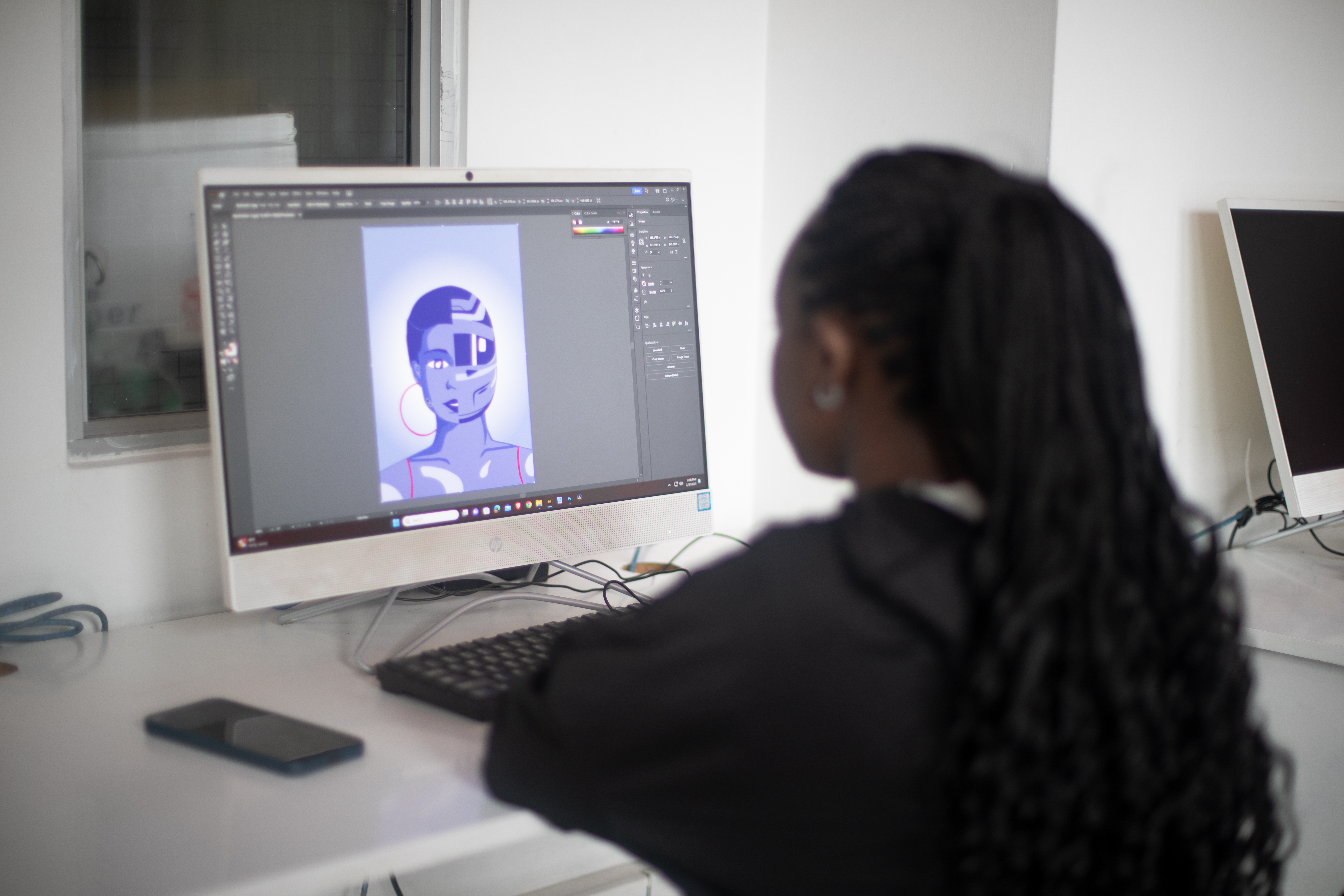
Graphic design is one of the fastest-growing creative careers in Kenya. From startups in Nairobi to NGOs across East Africa, every organisation needs visual communication — logos, websites, social media graphics, packaging, and brand identities. If you have an eye for aesthetics and a passion for visual storytelling, a career in graphic design could be your path.
But where do you start? What courses should you take? What skills do employers actually want? And what can you realistically earn? This comprehensive guide covers everything you need to know about becoming a graphic designer in Kenya — whether you are a high school graduate choosing your first course, or a university graduate looking to add practical creative skills.
What Does a Graphic Designer Do?
Graphic designers create visual concepts that communicate ideas. They use typography, colour theory, layout, and imagery to solve problems — whether that is designing a brand identity for a new business, creating a poster for an event, building a user interface for a mobile app, or producing packaging for a consumer product.
The role is both creative and strategic. A good graphic designer does not just make things look attractive — they make things work. Every design decision serves a purpose: guiding the viewer's eye, communicating a message, or prompting an action.
Industries That Hire Graphic Designers in Kenya
In Kenya, graphic designers work across a wide range of industries:
Advertising and marketing agencies — creating campaigns for brands like Safaricom, Equity Bank, EABL, and Kenya Airways. Agencies such as Scanad, Ogilvy Africa, and WPP-Scangroup regularly hire designers
Media houses — designing layouts for newspapers, magazines, and digital publications. Companies like Nation Media Group and Standard Group need in-house designers
Technology companies — building user interfaces and digital products. Kenya's tech ecosystem, including companies in iHub and Nairobi Garage, has growing demand for UI/UX designers
NGOs and international organisations — producing reports, infographics, data visualisations, and awareness materials. UNICEF, World Bank, and local NGOs regularly contract designers
E-commerce and retail — product photography, packaging design, and marketing materials for online and physical stores
Freelance and remote work — platforms like Upwork, Fiverr, and 99designs allow Kenyan designers to work with clients globally. Many ADMI graduates earn in USD while living in Nairobi
Here's what we've noticed after training over 3,000 creatives since 2012: the students who succeed fastest aren't necessarily the most talented on day one. They're the ones who treat every assignment like a real client brief. They build their portfolio from week one, not week twenty.
ADMI isn't a university — and that's intentional. Wilfred Kiumi founded it in 2012 specifically because he saw that Kenyan creative education was too theoretical. "At first people thought I was joking when I said I was trying to set up a school," he told the BBC. But today, ADMI is the only vocational school Netflix chose for its $1 million Creative Equity Scholarship Fund — alongside four universities. That says something about what the industry actually values.
Graphic Design Courses in Kenya: Your Options
To build a career in graphic design, you need structured training that covers both creative thinking and technical execution. Here are the main pathways available in Kenya:
Diploma in Graphic Design (18 months)
A diploma programme gives you comprehensive, hands-on training. At ADMI's Graphic Design Diploma, you spend 18 months mastering branding, typography, UI/UX design, print production, and digital design using industry-standard tools.
What makes ADMI's diploma different from other programmes in Kenya:
ECTS-accredited — the diploma carries ECTS credits via Woolf, meaning your qualification is recognised internationally, not just in Kenya
Real client briefs — you work on actual projects for real businesses, not hypothetical classroom exercises
Industry mentors — your lecturers are working designers with active portfolios, not purely academic instructors
Portfolio-focused — you graduate with a professional portfolio of 15+ projects ready to show employers or clients
Small class sizes with individualised feedback and mentorship
Access to professional-grade hardware, software licences, and printing facilities
Certificate in Graphic Design (6 months)
If you want a shorter pathway, a graphic design certificate covers the foundations in 6 months. This works particularly well for:
University graduates who already have a degree and want to add practical design skills
Working professionals looking to transition into a creative career
Entrepreneurs who want to handle their own brand design and marketing materials
People testing whether graphic design is the right career before committing to a full diploma
Diploma vs Certificate: Which Should You Choose?
The right choice depends on your situation:
Choose the diploma if you are starting fresh, want the deepest training, and plan to make graphic design your primary career. The 18-month programme gives you time to develop mastery and build a substantial portfolio
Choose the certificate if you already have a degree or work experience, want to upskill quickly, or want to combine design with another discipline like marketing or business
Essential Skills Every Graphic Designer Needs
Technical Skills
Adobe Photoshop — the industry standard for image editing, photo manipulation, and digital art. Every design job listing in Kenya mentions Photoshop
Adobe Illustrator — essential for logo design, icons, illustrations, and any vector-based graphics. This is the tool for brand identity work
Adobe InDesign — the go-to tool for multi-page layouts: brochures, annual reports, magazines, and book design
Figma — the fastest-growing design tool, especially for UI/UX and collaborative work. Kenya's tech companies increasingly require Figma proficiency
Typography — understanding font pairing, hierarchy, spacing, and readability. Typography is what separates amateur designs from professional work
Colour theory — how colours work together, influence emotion, and affect brand perception. Understanding colour systems (RGB, CMYK, Pantone) is essential for both digital and print
Print production — preparing files for professional printing: bleeds, colour profiles, paper stocks, and proofing. Many Kenyan agencies still produce significant print work
Creative and Business Skills
Visual problem-solving — translating a client brief into a design concept that meets business objectives
Brand thinking — understanding how design supports business strategy, positioning, and customer perception
Storytelling through visuals — making complex ideas simple, engaging, and memorable
Attention to detail — pixel-perfect execution, consistent spacing, and alignment
Client communication — presenting concepts, handling feedback, and managing expectations
Time management — most designers juggle multiple projects with tight deadlines
Career Opportunities and Salaries in Kenya
The demand for graphic designers in Kenya is strong and growing. According to job postings on BrighterMonday, LinkedIn, and industry surveys, here are typical roles and salary ranges:
Junior Graphic Designer — KES 30,000-60,000 per month. Entry-level role working under a senior designer or art director. You will execute designs from briefs and learn the professional workflow
Mid-Level Graphic Designer — KES 60,000-120,000 per month. Independent project management, direct client interaction, and responsibility for complete design deliverables
Senior Designer / Art Director — KES 120,000-250,000 per month. Leading creative teams, setting brand direction, and owning the visual identity of major accounts
Freelance Graphic Designer — KES 50,000-300,000+ per month. Variable income but with the potential to earn significantly more, especially with international clients paying in USD or EUR. A strong portfolio on Behance or Dribbble is essential
UI/UX Designer — KES 80,000-200,000 per month. One of the highest-paying design specialisations in Kenya, driven by demand from tech companies and startups
Many ADMI graphic design graduates work at leading agencies and companies across Kenya, including Scanad, Ogilvy, Nation Media, and various tech startups. Others have built successful freelance practices serving clients across Africa and internationally.
How to Build a Graphic Design Portfolio That Gets You Hired
Your portfolio is more important than your certificate. Employers and clients want to see what you can create, not just what courses you completed. Here is how to build a portfolio that stands out:
Start from day one — every course project is a potential portfolio piece. Treat assignments as real client work
Quality over quantity — include 8-12 of your best projects, not everything you have ever made. Each piece should demonstrate a different skill or style
Show the process — include sketches, wireframes, iterations, and the final design. Employers want to see how you think, not just the result
Create personal projects — redesign a local brand, create a campaign for a cause you care about, or design an app interface. These show initiative and passion
Include case studies — for your best projects, write a brief explanation of the brief, your approach, and the outcome. This demonstrates strategic thinking
Go online — use Behance, Dribbble, or a personal website to showcase your work. Many ADMI graduates get their first freelance clients through these platforms
Frequently Asked Questions
How long does it take to become a graphic designer?
With a diploma programme, you can become a job-ready graphic designer in 18 months. A certificate programme takes 6 months and covers the foundations. However, design is a lifelong learning journey — even experienced designers continuously develop their skills.
Do I need a university degree to become a graphic designer?
No. Most employers in Kenya care more about your portfolio and practical skills than your academic qualifications. A focused diploma from an accredited institution like ADMI, combined with a strong portfolio, is more valuable than a general university degree for landing design roles.
How much does a graphic design course cost in Kenya?
Course fees vary depending on the institution and programme length. ADMI offers flexible payment plans for both diploma and certificate programmes. Request a prospectus for detailed fee structures and available financial planning options.
Can I work as a freelance graphic designer?
Absolutely. Many ADMI graduates freelance full-time or combine freelance work with employment. Platforms like Upwork, Fiverr, and Behance give you access to clients worldwide. With strong skills and a professional portfolio, freelancing can be very lucrative.
What is the difference between graphic design and UI/UX design?
Graphic design focuses on visual communication — logos, posters, branding, print materials. UI/UX design focuses specifically on digital product interfaces — apps, websites, and software. There is significant overlap, and many designers work in both areas. ADMI's graphic design diploma covers UI/UX as part of the curriculum.
Watch: Graphic Design at ADMI
See what studying at ADMI is really like — watch these videos from our YouTube channel:
Getting Started: Your Next Steps
Ready to start your graphic design career? Here is what to do:
Explore the Graphic Design Diploma at ADMI — ECTS-accredited, taught by working industry professionals in Nairobi
Visit the ADMI campus to see the design studios, meet the faculty, and view student work
Apply for the May 2026 intake — places are limited and fill quickly
Start practising with free tools like Figma (free tier), Canva, or Adobe Creative Cloud trials while you wait
The creative industry in Kenya is booming. With the right training and a strong portfolio, you can build a rewarding career doing what you love — whether that is designing brands in Nairobi, creating digital products for tech companies, or freelancing for clients around the world.
Related programme
Ready to turn this into a career? Explore ADMI’s Graphic Design diploma.