
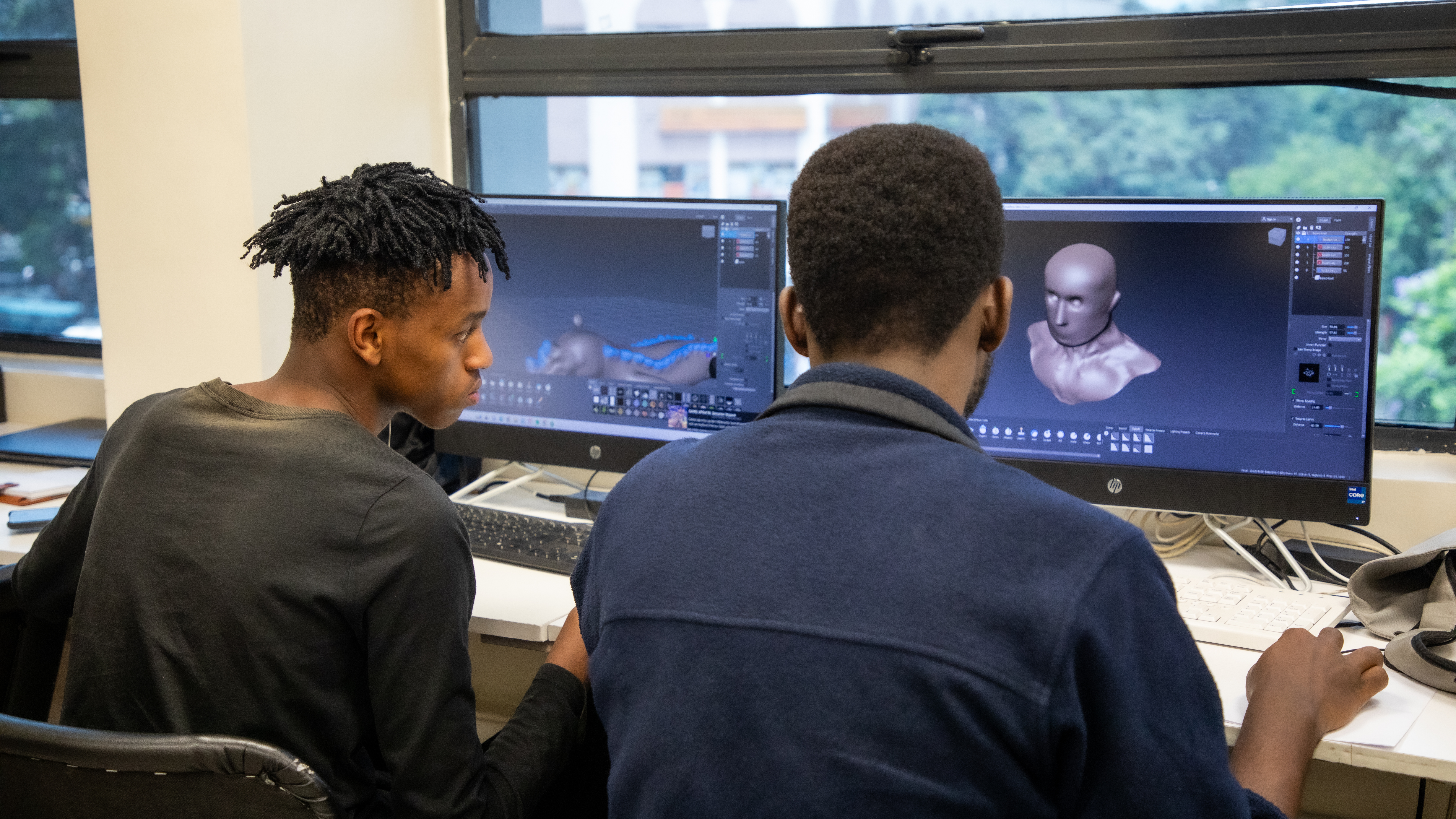
Remember when everyone said "there are no animation jobs in Kenya"? Look at the industry now. Netflix is commissioning animated African content. Kenyan studios are producing animation for international clients. Advertising agencies can't find enough motion graphics artists. And the gaming industry in East Africa is creating demand for 3D artists that simply didn't exist five years ago.
If you've ever watched an animated film, played a game, or seen a motion graphics sequence in a commercial and thought "I want to do that" — Kenya's animation industry is ready for you. Here's how to get in.
What Animators Actually Do
Animation is a broad field. Before diving in, understand the specialisations:
2D Animation — Traditional frame-by-frame animation and modern digital 2D. Think animated explainer videos, TV cartoons, and motion comics. Tools: Toon Boom Harmony, Adobe Animate, Procreate.
3D Animation — Creating three-dimensional characters, environments, and objects. Used in films, TV, games, and architectural visualisation. Tools: Autodesk Maya, Blender, Cinema 4D.
Motion Graphics — Animated graphic design. Text animation, logo reveals, social media content, broadcast graphics. The most immediately employable animation specialisation in Kenya. Tools: Adobe After Effects, Cinema 4D.
Visual Effects (VFX) — Compositing live-action footage with digital elements. Explosions, green screen replacement, digital set extensions. Growing in demand as Kenya's film industry expands. Tools: Nuke, After Effects, Houdini.
Game Art & Animation — Creating assets and animations for video games. Character models, environment art, gameplay animations. Growing with East Africa's gaming sector. Tools: Unity, Unreal Engine, Blender, Maya.
Character Animation — The specific skill of bringing characters to life through movement and expression. This is the most creatively demanding specialisation and the hardest to master.
Step 1: Learn the Fundamentals
Before touching any software, understand the principles that underpin all animation:
The 12 Principles of Animation (Disney's framework, still universal): squash and stretch, anticipation, staging, straight ahead vs pose-to-pose, follow-through, slow in/slow out, arcs, secondary action, timing, exaggeration, solid drawing, appeal.
These principles apply whether you're doing 2D, 3D, motion graphics, or VFX. A good animation programme teaches them through practice, not just theory.
Drawing Skills — You don't need to be a master artist, but understanding anatomy, proportion, perspective, and gesture drawing makes you a dramatically better animator.
Storytelling — Animation is storytelling through movement. Understanding narrative structure, character development, and visual communication is essential.
Step 2: Get Formal Training
ADMI — The Complete Path
ADMI (Africa Digital Media Institute) offers the most comprehensive animation programme in East Africa:
Certificate in Animation & Motion Graphics (3 months): Covers the fundamentals of 2D animation, motion graphics, and After Effects. Ideal for beginners and career changers.
Diploma in Animation (2 years): Deep training in 2D animation, 3D modelling and animation (Maya, Blender), motion graphics (After Effects, Cinema 4D), VFX, and character design.
ADMI's programme uses industry-standard software, includes Autodesk-certified instruction, and carries EU accreditation through Woolf — the only internationally accredited animation programme in East Africa.
The cross-disciplinary environment is a genuine advantage. Animation students collaborate with film students (creating VFX and animated sequences), music students (scoring animated projects), and digital marketing students (producing commercial animation). This mirrors exactly how studios and agencies work.
Apply: admi.africa
Other Options
Shang Tao Media Art College — Strong in 3D animation and game art. Good alternative for students focused on gaming.
MMU — University degree in Film & Animation. Longer but carries CUE accreditation.
Online Platforms — Animation Mentor, School of Motion, CG Cookie offer excellent online courses. Best as supplements to formal training rather than replacements.
Step 3: Master the Software
The animation industry runs on specific tools. Here's what you need to know:
Must-Know
Adobe After Effects — The universal motion graphics tool. Every animator in Kenya needs this.
Blender — Free, open-source, and increasingly used in professional studios. Covers 3D modelling, animation, and rendering.
Autodesk Maya — The industry standard for 3D animation in film and TV. ADMI teaches this with Autodesk-certified instructors.
Important to Know
Cinema 4D — Favourite of motion graphics artists. Integrates beautifully with After Effects.
Adobe Illustrator + Photoshop — Creating assets and textures.
Specialisation Tools
Toon Boom Harmony — Industry standard for 2D TV animation
Houdini — Simulations and procedural effects
Nuke — Professional VFX compositing
Unity / Unreal Engine — Game animation
Step 4: Build Your Reel
Your demo reel is your CV. It should be 1-2 minutes of your absolute best work. Quality over quantity — always.
What to include:
Character animation tests (walk cycles, acting shots)
Motion graphics pieces (logo reveals, infographics, social media content)
VFX composites (green screen, object tracking)
3D renders (environments, products, characters)
Any collaborative work (film VFX, music video animations, commercial work)
Where to share:
Vimeo — The professional standard for animation reels
YouTube — For discoverability
Behance — For design-focused work
ArtStation — For 3D and game art
Instagram — Short clips and WIPs attract clients and followers
Step 5: Start Earning
Immediate Opportunities in Kenya
Advertising Agencies: Every major agency in Nairobi needs motion graphics artists. This is the most accessible paid animation work.
Production Companies: As Kenya's film industry grows, demand for VFX and animation within live-action productions is increasing.
Corporate Animation: Explainer videos, training animations, and product visualisations for businesses across East Africa.
Content Creation: Animated social media content, YouTube intros and outros, and animated marketing materials.
Remote / International: With international accreditation (like ADMI's EU credential), Kenyan animators can work remotely for studios worldwide. The global animation industry is increasingly distributed.
Salary Expectations
Role | Entry Level | Mid-Career | Senior |
Motion Graphics Artist | KES 30,000 – 60,000 | KES 80,000 – 160,000 | KES 180,000 – 350,000 |
3D Animator | KES 35,000 – 70,000 | KES 90,000 – 180,000 | KES 200,000 – 400,000 |
VFX Artist | KES 40,000 – 80,000 | KES 100,000 – 200,000 | KES 200,000 – 450,000 |
Game Artist/Animator | KES 35,000 – 70,000 | KES 80,000 – 180,000 | KES 180,000 – 350,000 |
Freelance Animator | Variable | KES 50,000 – 200,000 | KES 200,000 – 500,000+ |
The Opportunity: Africa's Animation Boom
The African animation industry is projected to grow significantly over the next decade. Key drivers:
Streaming Content: Netflix, Showmax, and Disney+ are actively looking for African animated content. The success of shows like Kizazi Moto (Disney+) proved there's a global audience for African animation.
Advertising: As African markets grow, so does advertising spend — and animated advertising is growing faster than live-action.
Gaming: Africa's gaming market is expanding rapidly. Studios need 3D artists, character animators, and environment designers.
AI Augmentation: AI tools are making individual animators more productive, not replacing them. Animators who can use AI for in-betweening, style transfer, and asset generation will be exponentially more efficient.
Kenya is positioned at the centre of this — with the talent, the infrastructure, and the training institutions to supply the industry.
Ready to animate? Explore ADMI's Animation & Motion Graphics programmes → Watch student animations on YouTube →
Why Animation Is Africa's Next Big Creative Export
The numbers tell a story that most Kenyans haven't heard yet. The global animation industry is worth over $400 billion. Africa currently produces less than 2% of the world's animated content. That gap isn't a problem — it's the biggest creative opportunity on the continent.
Studios like Triggerfish in South Africa have already shown that African animation can compete globally. Closer to home, Kenyan animators are working on projects for international clients while local demand for animation in advertising, education, and entertainment grows exponentially.
Every major brand operating in Kenya — from Safaricom to NCBA to Tusker — uses animation in their marketing. TV stations like NTV and Citizen TV need motion graphics constantly. The demand is real, and the supply of trained animators is woefully inadequate.
What Professional Animation Actually Looks Like
Forget the idea that animation means sitting alone drawing cartoons. Modern animation is a team sport involving character designers, riggers, texture artists, lighters, compositors, and motion graphics specialists. A single thirty-second commercial might involve a dozen different specialists.
At ADMI, the Animation and Motion Graphics Diploma covers this full pipeline. Students don't just learn to draw or model — they learn the complete production workflow from concept to final delivery. This comprehensive approach is why ADMI's 3,500+ alumni network includes animators working across multiple specialisations.
"Almost 90% of the content we consume is from the rest of the world. This is where we can have a great impact." — Wilfred Kiumi, Co-Founder, ADMI
Skills That Pay: 2D, 3D, and Motion Graphics
The three main branches of animation each offer different career paths and income potential:
2D animation is experiencing a renaissance, partly driven by the success of shows like Arcane and Primal. For African storytelling, 2D often provides the most accessible entry point — it's culturally rich, relatively less resource-intensive than 3D, and in high demand for educational content.
3D animation commands the highest salaries but requires the most technical training. Gaming, architectural visualisation, and feature film work all demand 3D skills. ADMI's programme includes industry-standard 3D software training.
Motion graphics sits at the intersection of animation and graphic design. It's the most commercially active field in Kenya right now — every video ad, every broadcast title sequence, every corporate explainer video needs motion graphics. Graduates who can deliver quality motion graphics work rarely struggle to find paying clients.
"I believe that people in Hollywood are not the only ones who can make good films." — Claire Njoki, ADMI Alumna
Building an Animation Career in Kenya
The path from student to professional animator in Kenya typically follows one of three routes: joining a studio, freelancing, or starting your own studio.
Studios in Nairobi like Blue Sky Studios Africa, Fatboy Animations, and various advertising agency in-house teams offer employment for skilled animators. Entry salaries range from KES 40,000-80,000 monthly, rising to KES 150,000-300,000 for experienced professionals.
Freelance animators who build strong portfolios can earn significantly more, particularly those who secure international remote clients. The global nature of animation work means your physical location matters less than your skill level — a major advantage for Kenyan animators.
ADMI graduates benefit from the institute's 88% employment rate and extensive industry connections. The Woolf accreditation provides EU-recognised ECTS credits, making international work and further study accessible. TVETA Kenya registration ensures local credential recognition.
Frequently Asked Questions
Do I need to be good at drawing to study animation?
It helps for 2D animation, but it's not essential for all branches. 3D animation and motion graphics rely more on technical software skills and understanding of movement than traditional drawing ability. ADMI's programme develops these skills from the basics.
What software will I learn?
ADMI's programme covers industry-standard tools including Adobe After Effects, Cinema 4D, Blender, and other professional software. The specific software mix evolves as the industry changes, ensuring graduates are trained on what employers actually use.
How long before I can start earning from animation?
Many ADMI students begin taking on small freelance projects during their programme. After graduation, most find paid work within six to twelve months. The key is building a strong showreel that demonstrates your range and technical ability.
Is there a market for animation in Kenya or do I need to work internationally?
Both. The local market is growing rapidly — advertising, education, entertainment, and corporate sectors all need animation. International remote work is also very accessible for skilled animators. Many professionals do both simultaneously.
Start Animating Your Future
ADMI's Animation and Motion Graphics Diploma next intake is January 2027 (classes start Monday 18 January), then May 2027.
Apply now at apply.admi.africa or learn more about the
Animation and Motion Graphics Diploma programme.