logo-01.8315cd3f.png&w=256&q=75)
Kenya's film industry is in the middle of a genuine boom. Netflix is commissioning East African content. Local productions like Watu Wote have reached the Oscars. The Kenya Film Commission is investing in infrastructure, and platforms like YouTube and Showmax mean Kenyan filmmakers no longer need Hollywood's permission to find an audience.
But here's what most people don't realise: the gap between a great training programme and a mediocre one can define your entire career. We've seen graduates from production-focused schools land jobs on set within weeks. We've also seen graduates from theory-heavy institutions struggle to operate basic equipment. This guide helps you tell the difference.
What Actually Matters When Choosing a Film School
Forget the glossy brochures for a moment. The single most important question is this: will you graduate with a portfolio of real productions, or just a stack of essays about cinema theory?
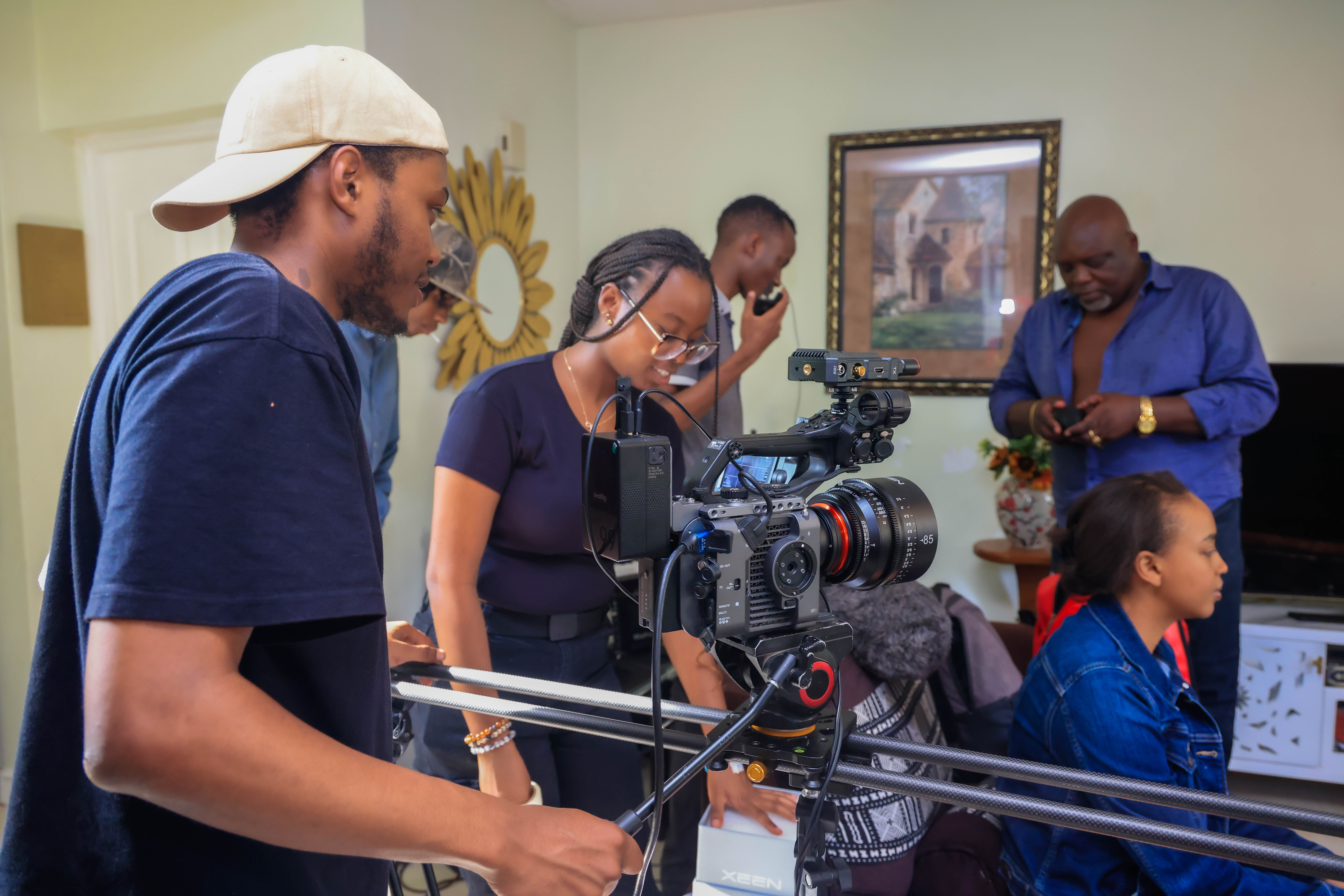
The best film programmes get cameras in your hands from week one. You should be directing short scenes, recording dialogue, and editing sequences before you finish your first semester. Film is a craft — like carpentry or surgery — and you cannot learn it from a textbook. Be deeply sceptical of any programme that is mostly lectures.
Equipment matters too. There is a difference between learning on a smartphone and learning on cinema-grade cameras with professional lighting and sound gear. When you show up on a real set, you need to know your way around the equipment that production companies actually use.
Then there's the question of who teaches you. Working filmmakers bring something academics cannot: current industry knowledge, professional networks, and the kind of hard-won production wisdom that only comes from years on set. Ask any school you're considering: are your lecturers currently making films?
Finally, check the credentials. TVETA registration is the baseline in Kenya. International recognition — such as ECTS credits through an accredited institution like Woolf — means your qualification carries weight beyond East Africa. And always ask about graduate outcomes. Where are the alumni? What are they working on? That tells you more than any marketing material.
Here's something most guides won't tell you. The film industry in Kenya isn't waiting for you to get a degree. It's moving fast — and the people getting hired are the ones who can actually operate a camera, edit a sequence, or manage a set. We've seen this pattern at ADMI for over a decade.
"Almost 90% of the content we consume is from the rest of the world — from Mexican soaps to Malaysian stories to big box office American movies," says Wilfred Kiumi, who founded ADMI in 2012 after growing up in a Nairobi slum and working in a barbershop to fund his own education. "This is where we can have a great impact on the world, and also on how the world sees Africa."
That vision became reality in 2018. Eight ADMI graduates worked on Watu Wote, a short film nominated for an Oscar — the first time a Kenyan production team had reached the Academy Awards. Claire Njoki, who designed the film's set at age 22, put it simply: "I believe that people in Hollywood are not the only ones who can make good films."
Film Production Courses at ADMI
Diploma in Film and Television Production
This is ADMI's flagship filmmaking programme — a comprehensive course that takes you through every discipline a professional filmmaker needs. It is ECTS-accredited through Woolf, which means your credits are recognised internationally.
You start with the fundamentals of visual storytelling: camera operation, lens selection, composition, and lighting. Within the first few weeks, you're shooting. Not exercises — actual scenes, with actors, on sets. The programme builds from there into directing, where you learn to translate scripts into images, work with performers, and manage the creative chaos of a production.
Editing is where the film really gets made, and this programme takes it seriously. You work in Adobe Premiere Pro and DaVinci Resolve — the same tools used on Netflix productions and feature films. Colour grading, visual effects fundamentals, and the craft of assembling raw footage into something that holds an audience.
Sound is the most underrated skill in filmmaking. Half of what audiences experience in a film is audio — yet most schools barely touch it. At ADMI, sound design gets dedicated attention: recording clean dialogue on set, creating Foley and effects, editing and mixing for cinema and broadcast.
The programme also covers screenwriting (structure, character, dialogue) and production management (budgets, schedules, locations, crew logistics). These skills separate filmmakers who can execute their vision from those who have great ideas but can't get them made.
You graduate with a portfolio of completed productions — short films, documentaries, commercials — that demonstrate your skills to employers. Not hypothetical projects. Real work.
Certificate in Video Production (6 months)
If you are looking for a shorter introduction to filmmaking, ADMI offers a Video Production Certificate that covers the fundamentals of camera work, editing, and visual storytelling in 6 months. This works well for:
University graduates who want to add filmmaking skills to their profile
Content creators who want to improve their video production quality
Corporate professionals who need video skills for their organisation
People exploring whether a career in film is right for them
Career Opportunities in Kenya's Film Industry
The range of work available to trained filmmakers in Kenya is broader than most people expect.
The most visible path is directing — leading the creative vision of a production. Kenyan directors like Wanuri Kahiu (Rafiki) and Likarion Wainaina (Supa Modo) have shown that East African stories can reach global audiences. But directing is just one option.
Cinematography is arguably the most valued technical role on any production, and good DPs are scarce in Kenya. If you have an eye for light and composition, this is a career with serious earning potential. The same goes for editing — one of the most in-demand skills across film, television, advertising, and corporate video. Every company in Nairobi that produces content needs editors, and there aren't enough skilled ones.
Documentary filmmaking is a particularly strong path in Kenya. International NGOs, media houses, streaming platforms, and development organisations all need documentary content — and Kenya's social landscape provides subjects that the world wants to see. Many ADMI graduates build sustainable careers combining documentary work with commercial projects.
Then there's the corporate and digital side: branded content, social media video, event coverage, music videos. This is the fastest-growing segment. Freelance videographers in Nairobi regularly earn six-figure KES monthly incomes once they build a reputation and client base. It's not glamorous, but it pays the bills while you work on your passion projects.
Why Now? The Growth of Kenya's Film Industry
The timing for entering Kenya's film industry has never been better, and that's not empty marketing — the numbers back it up.
The biggest driver is streaming. Netflix alone has committed to commissioning more African content, and Showmax and Amazon Prime are following. Every commissioned series needs directors, cinematographers, editors, sound designers, production assistants — the entire chain. This is creating paid work that simply didn't exist five years ago.
The Kenya Film Commission is playing its part too, supporting local productions with funding, permits, and infrastructure. And the economics have shifted: digital distribution through YouTube, TikTok, and social platforms means you can build an audience and earn revenue without anyone's permission. Some Kenyan content creators are generating more revenue from YouTube than they would from traditional broadcast.
Kenya itself is increasingly attractive as a production destination. The diverse landscapes — coast, savannah, highlands, urban Nairobi — combined with a growing pool of trained crew and favourable climate make it a practical choice for international productions shooting in Africa.
ADMI on the Global Stage
ADMI graduates have already proven they can compete at the highest level. In 2018, eight ADMI graduates were part of the team behind Watu Wote (All of Us), a Kenyan-German film nominated for Best Short Live Action Film at the Academy Awards (Oscars). The film tells the story of Muslim passengers protecting Christians during an Al-Shabaab terror attack on a bus in Kenya.
As BBC reported, ADMI graduate Claire Njoki, who designed and built the film's set, said: "I believe that people in Hollywood are not the only ones who can make good films. My biggest aim is to stay in Kenya, grow the industry and tell our stories."
This Oscar nomination put ADMI — and Kenya's entire film industry — on the global map. It demonstrated that with the right training, Kenyan filmmakers can create world-class content.
Frequently Asked Questions
Do I need previous filmmaking experience?
No. Most students start with zero production experience. The programme is built for beginners — you'll progress from basic camera handling to directing complete short films. What matters is curiosity and a willingness to put in the hours. Talent helps, but work ethic matters more.
What equipment will I use?
Professional cinema cameras, lighting rigs, sound recording equipment, and editing suites running Premiere Pro and DaVinci Resolve. The point is to learn on the same gear you'll encounter on real productions, so there's no adjustment period when you land your first job.
Can I actually make a living as a filmmaker in Kenya?
Yes — but let's be honest about how. Very few filmmakers survive on narrative work alone in the early years. The smart approach is building a commercial income (corporate video, events, advertising) that funds your creative projects. Many successful Kenyan filmmakers follow this model. The demand for skilled video professionals genuinely exceeds supply right now, so if you can operate a camera and edit competently, work is available.
How is ADMI different from other film schools?
Three things stand out. The programme is ECTS-accredited through Woolf — that's international credential recognition, not just a local certificate. The faculty are working filmmakers, not career academics. And the emphasis is relentlessly practical: you produce real films throughout the course, building a portfolio that proves your skills to anyone who might hire you. Eight graduates worked on an Oscar-nominated film. That's the standard.
Watch: Filmmaking at ADMI
See what studying at ADMI is really like — watch these videos from our YouTube channel:
Netflix Scholarship Fund
ADMI is the only vocational school selected — alongside four universities — for for the Netflix Creative Equity Scholarship Fund — a million programme funding tuition, accommodation, and living stipends for aspiring filmmakers across East Africa. As Screen Daily reported, Netflix is investing directly in training the next generation of African storytellers. Forbes covered the fund as part of Netflix's global creative equity initiative.
Apply to Study Film at ADMI
If you've read this far, you're probably serious about filmmaking. Here's what to do next:
Look at the Diploma in Film and Television Production — ECTS-accredited, hands-on from week one, portfolio-focused
Visit the ADMI campus in Nairobi to see the studios, editing suites, and equipment for yourself
Apply for the May 2026 intake — spaces are genuinely limited and the programme does fill up
Start watching films with your brain switched on. Study how directors use cuts, angles, sound, and pacing. That analytical eye is where great filmmaking begins
Kenya's creative industry is growing fast. The platforms want African content. The audiences are there. The question is whether you'll be one of the people making it.
Related programme
Ready to turn this into a career? Explore ADMI’s Film & TV Production diploma.