logo-01.8315cd3f.png&w=256&q=75)
Africa's animation industry is projected to be worth over $1 billion by 2030 — and Kenya is at the forefront. From Mama K's Team 4 on Netflix to explainer videos for M-Pesa, animated content is everywhere. Yet the number of trained animators in Kenya is tiny compared to the demand. That gap is your opportunity.
Whether you dream of creating the next great African animated series, want to work in advertising, or are interested in gaming and visual effects, animation courses in Kenya can launch your career. This guide covers everything you need to know.
Types of Animation You Can Learn
2D Animation
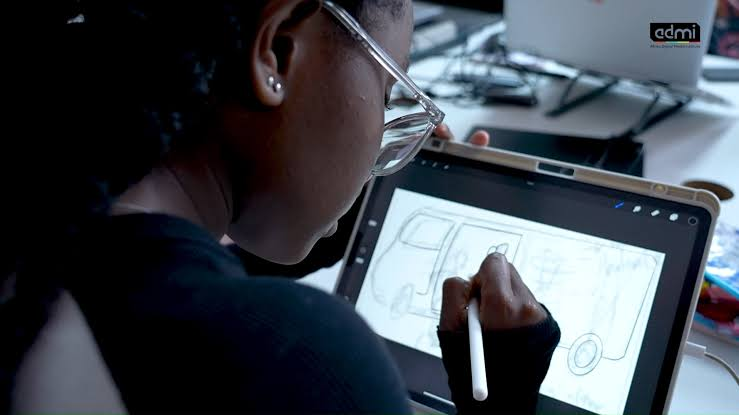
The art of creating movement in a two-dimensional space. From traditional hand-drawn animation to digital techniques using rigging and interpolation. 2D animation is used extensively in explainer videos, educational content, TV series, advertising, and social media content.
Industry tools: Adobe Animate, Toon Boom Harmony, After Effects, Procreate (for frame-by-frame).
Why it matters in Kenya: Most animated content produced for Kenyan brands, NGOs, and educational institutions is 2D. It is faster and more cost-effective to produce than 3D, making it the most commercially viable animation skill in East Africa.
3D Animation and Modelling
Creating three-dimensional characters, environments, and objects that move in virtual space. 3D animation is used in film visual effects, gaming, architectural visualisation, product design, medical animation, and high-end advertising.
Industry tools: Autodesk Maya (film and gaming standard), Cinema 4D (advertising and motion graphics), Blender (free, open-source, increasingly used professionally).
Why it matters: 3D skills command higher rates and open doors to international work. Studios in South Africa, Nigeria, and internationally outsource 3D work to skilled freelancers in East Africa.
Motion Graphics
Animated graphic design — bringing text, logos, icons, data, and shapes to life. Motion graphics bridge the gap between graphic design and animation. They are used in advertising, corporate videos, title sequences, social media content, data visualisation, and UI animation.
Industry tools: Adobe After Effects (the primary tool), Cinema 4D (for 3D integration), Premiere Pro (for video editing).
Why it matters in Kenya: Motion graphics is the most immediately employable animation skill. Every advertising agency, media company, and brand producing video content needs motion graphics. It is also the fastest to learn, making it an excellent starting point.
Character Animation
The specialised art of bringing characters to life with believable movement, weight, and emotion. Character animation requires understanding of anatomy, physics, acting, and storytelling. It is the discipline behind animated films, series, and game characters.
This is a deeper specialisation that builds on 2D or 3D fundamentals. The most accomplished character animators are among the highest-paid creative professionals in the world.
Animation is one of those fields where Kenya is genuinely early. The opportunity is massive — and the competition is still thin. Most animation content consumed in Africa is imported. But that's changing. And the people who train now will be the ones leading the industry in five years.
ADMI's 2D Animation Certificate is delivered in partnership with Rubika — ranked among Europe's top animation schools — funded by an €800,000 grant from the French Development Agency (AFD). That means you're not just learning from Kenyan instructors; you're getting curriculum designed by one of the world's best animation schools, adapted for the African market.
When Netflix launched its $1 million Creative Equity Scholarship Fund for East Africa, ADMI was the only vocational school selected alongside four universities. That's not a coincidence — it's recognition that ADMI's practical training produces graduates who are actually ready to work.
Animation Courses at ADMI
Diploma in Animation and Motion Graphics (18 months)
The Animation and Motion Graphics Diploma at ADMI is the most comprehensive animation programme available in Kenya. Over 18 months, you build skills across multiple animation disciplines:
The 12 principles of animation — timing, spacing, squash and stretch, anticipation, follow-through, and more. The foundation that separates amateur work from professional
2D animation techniques — both traditional and digital approaches
3D modelling and animation in Autodesk Maya and Cinema 4D
Motion graphics in Adobe After Effects — title sequences, logo animations, social media content, data visualisation
Character design — creating original characters with distinct visual identities and personalities
Storyboarding and pre-production — planning animated sequences before production, essential for client work
Compositing — combining animated elements with live-action footage
Professional showreel development throughout the programme
The programme is ECTS-accredited through Woolf with international ECTS credits. You graduate with a professional showreel — the most important asset for getting hired or landing freelance clients.
2D Animation Certificate (Rubika Partnership)
For those specifically interested in 2D animation, ADMI offers a 2D Animation Certificate in partnership with Rubika, one of Europe's top-ranked animation schools. This shorter programme focuses on 2D animation fundamentals and character design — ideal for those who want a focused introduction or who plan to specialise in 2D.
Skills That Animation Employers Want
Technical Skills (Essential)
Adobe After Effects — the single most requested animation tool in Kenyan job postings. Every advertising agency, media company, and video production house uses After Effects for motion graphics
Autodesk Maya or Cinema 4D — for 3D work. Maya dominates film and gaming; Cinema 4D is preferred in advertising and broadcast motion graphics
Adobe Illustrator and Photoshop — for creating the assets (characters, backgrounds, icons) that get animated
Storyboarding — the ability to plan and visualise animated sequences before production. Critical for client work and team collaboration
Character rigging — setting up digital skeletons that allow characters to move. A specialised skill that is always in demand
Video editing — Adobe Premiere Pro or DaVinci Resolve. Animators frequently need to edit their work into final deliverables
Creative Skills (What Separates Great From Good)
Drawing ability — you do not need to be a master illustrator, but understanding form, proportion, perspective, and movement is essential for any animation discipline
Storytelling — animation is fundamentally about telling stories through movement. Understanding narrative structure, pacing, emotion, and character motivation
Observation — great animators are great observers. They study how people move, how objects behave, how light falls. This observation translates into believable animation
Patience and attention to detail — animation is time-intensive. A single minute of polished animation can take days or weeks to produce. The willingness to refine and iterate is non-negotiable
Colour theory and composition — understanding how visual elements work together to create mood, direct attention, and communicate meaning
Career Opportunities and Salaries in Kenya
The demand for animators in Kenya spans multiple industries:
Advertising and marketing agencies — creating animated adverts, explainer videos, product demos, and social media content. This is currently the largest employer of animators in Kenya. KES 50,000-180,000 per month
Film and television — visual effects, title sequences, animated segments, and full animated productions for Kenyan and international content. Growing rapidly with streaming platform investment
Education and development — animated educational content, training videos, and awareness campaigns. International organisations like UNICEF, the World Bank, and GIZ regularly commission animated content from Kenyan studios
Gaming — Kenya's gaming industry is young but growing, with studios creating African-themed mobile and PC games
Corporate — internal training animations, product demonstrations, onboarding videos, and corporate presentations
Freelance and international — platforms like Upwork, Fiverr, and specialised animation marketplaces connect Kenyan animators with global clients. International rates start at $30-80 per hour for skilled animators — significantly above local employment salaries
YouTube and content creation — animated YouTube channels and social media content. Some Kenyan animators have built significant online followings with original characters and series
Why Animation in Africa Is Growing
African animated content is gaining global recognition — Mama K's Team 4 (Netflix), Supa Strikas (Disney XD), and Bino and Fino demonstrate the international appetite for African stories
International animation studios are outsourcing production work to African talent — driven by competitive rates and growing skill levels
The African Union has identified the creative economy as a strategic growth area, with animation specifically highlighted as a priority sector
Kenya's technology ecosystem creates constant demand for explainer videos, app animations, and UX motion design for tech startups
Social media platforms algorithmically prioritise video and animated content over static images, creating ongoing demand for motion graphics
Virtual and augmented reality applications are emerging, requiring 3D modelling and animation skills that will only become more valuable
Frequently Asked Questions
Do I need to know how to draw to study animation?
Basic drawing skills help, particularly for 2D animation and character design. However, many successful animators — especially in 3D and motion graphics — rely primarily on software skills. The diploma programme teaches fundamentals for all starting levels. If drawing is not your strength, motion graphics and 3D modelling may be your best entry point.
What computer do I need?
During the programme, you use ADMI's professional workstations. For personal practice, a laptop with at least 16GB RAM, a dedicated graphics card, and an SSD is recommended. Both Mac and Windows work for industry-standard software.
Is animation a viable career in Kenya?
Yes. The demand for animated content across advertising, education, entertainment, and corporate sectors is strong and growing faster than the supply of trained animators. Many Kenyan animators combine local employment with international freelance work, building substantial incomes.
How long does it take to become a professional animator?
The 18-month diploma gives you the skills and showreel needed to start working professionally. Like any creative craft, mastery deepens with years of practice. But graduates consistently land agency roles, freelance contracts, and studio positions within months of completing the programme.
Watch: Animation at ADMI
See what studying at ADMI is really like — watch these videos from our YouTube channel:
International Partnerships
ADMI's animation programmes are backed by world-class partnerships. The 2D Animation Certificate is delivered in partnership with Rubika, one of Europe's top-ranked animation schools (funded by the French Development Agency — AFD with an €800,000 grant). This means you learn from both Kenyan and French animation professionals using the latest industry techniques.
Start Your Animation Career
Explore the Animation and Motion Graphics Diploma at ADMI — ECTS-accredited, professional labs, industry mentors
Download Blender (free) and start experimenting with 3D modelling
Apply for the May 2026 intake — places are limited
Start an animation sketchbook — draw daily, even simple movements and character poses. Observation is the foundation of great animation
The world needs African stories told by African animators. With the right training, you can be part of building an entire industry — not just finding a job in one.