What is Sound Engineering?
A complete guide to sound engineering — types, tools, career paths, and how to study in Kenya
What is Sound Engineering?
Sound engineering is the technical and creative discipline of recording, processing, mixing, mastering, and reproducing audio. It is the science and art behind every song you stream, every film soundtrack that moves you, every live concert that fills a stadium, and every podcast episode that sounds crisp in your earphones.
At its core, sound engineering is about controlling audio. A sound engineer understands how sound waves behave in physical spaces, how microphones capture those waves, how electronic and digital signal processing shapes them, and how speakers and headphones reproduce them for listeners. This knowledge spans physics, electronics, music, and increasingly, computer science.
The field has evolved dramatically over the past two decades. Where sound engineers once worked exclusively with analogue tape machines and hardware mixing consoles, today's engineers combine classic analogue techniques with powerful digital audio workstations (DAWs) like Pro Tools, Logic Pro, and Ableton Live. The fundamentals — microphone placement, gain staging, EQ, compression, spatial effects — remain the same, but the tools have become more accessible and versatile.
In Kenya and across East Africa, sound engineering is a rapidly growing profession. Nairobi's music scene, expanding film and television industry, booming events sector, and the explosion of digital content creation have created strong demand for trained sound engineers. Whether you want to record the next Kenyan chart-topper, mix audio for a Netflix production, or run live sound at festivals across the continent, sound engineering is the skill set that makes it happen.
Types of Sound Engineering
Sound engineering is not a single job — it is an umbrella term covering several distinct specialisations. Each type requires a shared foundation of audio knowledge but applies it in different contexts with different workflows and equipment.
1. Studio Recording Engineering
Studio recording engineers work in controlled acoustic environments to capture musical performances, voiceovers, and audio content. They select and position microphones, manage signal routing through mixing consoles, set recording levels, and ensure every take is captured cleanly. This is the most traditional form of sound engineering and the foundation that most engineers learn first. At ADMI, students train in professionally equipped recording studios with SSL consoles, Neumann microphones, and Genelec monitors — the same equipment used in world-class studios.
2. Live Sound Engineering
Live sound engineers manage audio at concerts, festivals, corporate events, conferences, and houses of worship. They work in two primary roles: the front-of-house (FOH) engineer controls what the audience hears through the main PA system, while the monitor engineer controls what the performers hear on stage. Live sound demands quick problem-solving under pressure — there is no "undo" button during a live show. Kenya's thriving events industry, from music festivals like Koroga to corporate conferences and church services, employs a large number of live sound professionals.
3. Film and TV Post-Production Audio
Post-production sound engineers work on audio after filming is complete. This includes dialogue editing (cleaning up on-set recordings), Foley (creating sound effects by recording physical actions), ADR (automated dialogue replacement — re-recording dialogue in a studio), sound design (creating atmospheric and effects soundscapes), and the final mix that balances all audio elements for cinema, television, or streaming. With Kenya's film industry growing — including productions for international platforms — demand for post-production audio professionals is rising steadily.
4. Broadcast Audio Engineering
Broadcast engineers handle audio for radio and television programming, both live and pre-recorded. They manage audio levels, apply processing for consistent broadcast quality, and troubleshoot equipment in real-time during live transmissions. Kenya's major broadcasters — Royal Media Services, Nation Media Group, KBC, and numerous radio stations — employ broadcast audio engineers. The technical demands are unique: broadcast has strict loudness standards, tight turnarounds, and zero tolerance for dead air.
5. Podcast and Digital Audio Production
The newest branch of sound engineering, digital audio production covers podcasts, audiobooks, YouTube audio, and content for streaming platforms. While the barrier to entry is lower than traditional studio work, professional-quality podcast and digital production still requires solid engineering fundamentals — proper microphone technique, room acoustics, noise reduction, EQ, compression, and mastering for different playback platforms. This is one of the fastest-growing segments in Kenya, with content creators, media companies, and brands all investing in professional audio content.
What Does a Sound Engineer Do Day-to-Day?
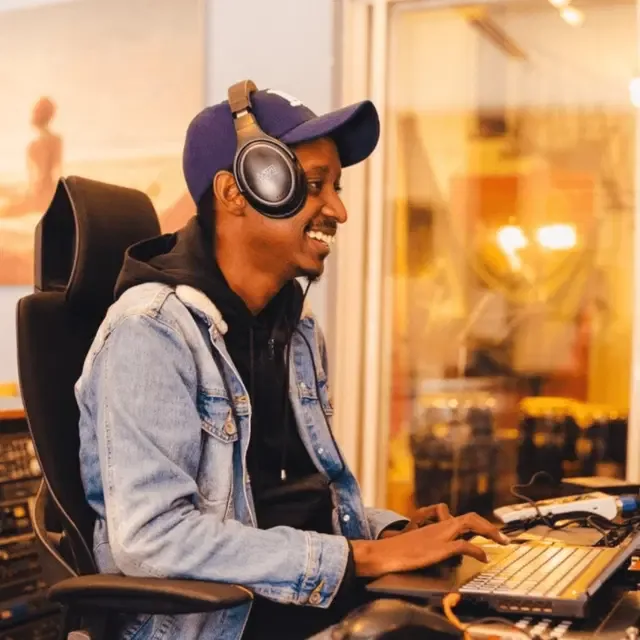
Hendrick Sam, Head of Sound Engineering at ADMI, at the studio's SSL console
The daily work of a sound engineer varies significantly depending on their specialisation, but there are common threads that run through every role. Here is what a typical workflow looks like across different settings:
Pre-session preparation: Before any recording or event, a sound engineer prepares the technical setup. In a studio, this means checking microphones, patching signal paths, calibrating monitors, loading session templates in the DAW, and communicating with the artist or producer about the session's goals. For live events, preparation involves system checks, soundchecks, line checks, and ensuring all backup equipment is ready.
Recording and capture: During a studio session, the engineer monitors levels, adjusts microphone positions, manages headphone mixes for performers, and ensures every take is recorded properly. They must balance technical precision with creative sensitivity — understanding when an artist is delivering their best performance versus when a retake is needed due to technical issues.
Editing and processing: After recording, engineers edit audio — removing unwanted noise, timing corrections, pitch correction where appropriate, comping (selecting the best parts of multiple takes), and preparing tracks for mixing. This phase requires both technical skill and musical judgement.
Mixing: Mixing is where all recorded elements are balanced, panned, EQ'd, compressed, and enhanced with effects to create a cohesive final sound. A mixing engineer might spend hours adjusting the relationship between a vocal, drums, bass, and other instruments to achieve the right emotional impact. This is often considered the most creative phase of sound engineering.
Mastering: The final step in music production, mastering prepares the mixed audio for distribution. A mastering engineer applies subtle EQ, compression, stereo enhancement, and loudness optimisation to ensure the track sounds consistent across all playback systems — from car speakers to studio monitors to phone earbuds.
For a deeper look at sound engineering as a career, read our Sound Engineer Career Guide, which covers salary ranges, employer types, and step-by-step career advice for Kenya.
Sound Engineering Tools & Equipment
Professional sound engineering requires both hardware and software tools. Understanding these tools is a core part of any sound engineering programme. Here are the essential categories:
Digital Audio Workstations (DAWs)
DAWs are the central software platform for modern sound engineering. Pro Tools is the industry standard for studio recording and post-production — virtually every professional studio in the world runs Pro Tools, and proficiency in it is a non-negotiable requirement for employment. Logic Pro is widely used for music production and composition, particularly in East Africa. Ableton Live dominates electronic music production and live performance setups. ADMI students gain hands-on training in all three DAWs, ensuring they can work in any professional environment.
Mixing Consoles
The mixing console (or mixing desk) is the hardware heart of any recording studio. SSL (Solid State Logic) consoles are considered the gold standard in professional recording — their distinctive sound character has shaped decades of hit records. ADMI's Nairobi studios feature SSL consoles, giving students experience on the same equipment found in top studios worldwide. Digital consoles from brands like Yamaha and Allen & Heath are standard for live sound applications.
Microphones
Microphones are the first link in the audio chain, and choosing the right microphone for each source is a fundamental engineering skill. Large-diaphragm condensers (Neumann U87, AKG C414) are the workhorses of vocal recording. Dynamic microphones (Shure SM57, SM58) are essential for instruments and live applications. Ribbon microphones capture a warm, natural sound ideal for strings, brass, and room ambience. Understanding polar patterns, frequency response, and proximity effect is critical to getting great recordings.
Studio Monitors and Headphones
Accurate monitoring is essential — you cannot mix what you cannot hear accurately. Genelec and Adam Audio studio monitors are industry standards, providing flat frequency response for critical listening. Professional headphones from Beyerdynamic and Sennheiser are used for detailed editing and tracking sessions. ADMI's studios are equipped with Genelec monitors in acoustically treated rooms, ensuring students develop their critical listening skills on reference-grade equipment.
Outboard Processing
Hardware compressors, equalisers, preamps, and reverb units remain important tools despite the rise of software plugins. Classic units from brands like Universal Audio, Neve, and API offer a sonic character that many engineers prefer over their digital equivalents. Understanding both hardware and software processing gives engineers maximum flexibility in any work environment.
Sound Engineering vs Music Production

Kennedy Wathome, ADMI Music Production graduate and working music producer
One of the most common questions we receive at ADMI is: "What is the difference between sound engineering and music production?" While the two disciplines overlap significantly, they have distinct focuses:
| Aspect | Sound Engineering | Music Production |
|---|---|---|
| Primary focus | Technical — recording, mixing, mastering | Creative — composing, arranging, beat-making |
| Core skills | Signal flow, microphone technique, EQ, compression, acoustics | Music theory, arrangement, synthesis, sampling, songwriting |
| Primary DAW | Pro Tools (industry standard) | Logic Pro, Ableton Live, FL Studio |
| Work environment | Recording studios, live venues, broadcast, film sets | Home studios, beat labs, production rooms |
| Career roles | Recording engineer, mixing engineer, live sound engineer | Music producer, beat maker, songwriter-producer |
| ADMI programme | Sound Engineering Diploma | Music Production Diploma |
In practice, the line between sound engineering and music production is increasingly blurred. Many professionals — particularly in Kenya's music industry — wear both hats. A producer who creates beats also needs to know how to record vocals properly. A mixing engineer benefits enormously from understanding musical arrangement. The best audio professionals have skills in both areas.
If you are unsure which path is right for you, ADMI's Music Production & Sound Engineering Foundation Certificate is a 4-month programme that introduces both disciplines, helping you discover your strengths before committing to a full diploma. For a detailed look at the music production career path, see our Music Producer Career Guide.
How to Become a Sound Engineer in Kenya

Karumba Ngatia, ADMI graduate, professional DJ and mix engineer
Becoming a professional sound engineer in Kenya requires a combination of formal training, practical experience, and industry connections. Here is a clear pathway:
- Build a foundation in audio basics. Before formal training, familiarise yourself with how sound works. Listen critically to music, pay attention to how different instruments are placed in a mix, and start exploring free DAW software like GarageBand or Audacity. This gives you a head start when you begin structured learning.
- Enrol in a structured training programme. Self-teaching has limits — professional sound engineering requires hands-on experience with equipment you cannot access at home. ADMI's Sound Engineering Diploma is a 2-year programme accredited through Woolf (ECTS credits) and registered with TVETA Kenya. Students train on professional-grade SSL consoles, Neumann microphones, and Genelec monitors in ADMI's purpose-built Nairobi studios.
- Master Pro Tools — it is non-negotiable. Pro Tools is the industry standard DAW for recording studios and post-production houses worldwide. If you want to work in a professional studio in Kenya or anywhere else, Pro Tools proficiency is expected. ADMI's curriculum includes extensive Pro Tools training, and many graduates pursue Avid Pro Tools certification to strengthen their CV.
- Develop your ears through critical listening. Technical knowledge is only half the equation. Great sound engineers have trained ears — they can identify frequency imbalances, detect subtle distortion, and make mix decisions by ear. This skill is developed through consistent practice: analysing reference tracks, comparing mixes on different speaker systems, and doing frequency identification exercises.
- Complete an industry placement or internship. ADMI's programme includes a mandatory industry placement that connects students with recording studios, production houses, and media companies in Nairobi. Many studios hire from their intern pool, making this a critical career launchpad. Build relationships during your placement — the Kenyan audio industry runs on reputation and referrals.
- Build a portfolio of work. Record, mix, and master tracks for emerging artists. Create before-and-after demos that showcase your engineering skills. A strong portfolio with audible results carries more weight than any qualification alone. Share your work on SoundCloud, YouTube, and social media to build visibility.
- Network relentlessly. Attend music events, producer meetups, and industry showcases in Nairobi. Join online audio engineering communities. Collaborate with filmmakers, content creators, and musicians. The Kenyan creative industry is tightly knit — relationships are your most valuable professional asset. ADMI's alumni network of over 2,000 graduates across East Africa provides a built-in professional community.
Sound Engineering Courses at ADMI
ADMI (Africa Digital Media Institute) is Kenya's leading institution for sound engineering training. Located in Nairobi, ADMI offers three programmes covering different levels and career goals:
Sound Engineering Diploma
2 years | ECTS-accredited via Woolf | TVETA registered
The flagship programme. Covers studio recording, mixing and mastering, live sound, film post-production audio, and sound design. Students train on SSL consoles, Pro Tools, Logic Pro, and professional microphone and monitoring systems. Includes a mandatory industry placement. 88% of graduates are employed within 6 months. Intakes in January, May, and September.
Music Production Diploma
2 years | ECTS-accredited via Woolf | TVETA registered
Focused on the creative side — beat-making, composition, arrangement, synthesis, and music business. Ideal for aspiring music producers, beat makers, and songwriter-producers. Shares foundational audio modules with the Sound Engineering Diploma, giving graduates solid technical skills alongside their creative training.
Music Production & Sound Engineering Foundation Certificate
4 months | Entry pathway to diploma programmes
A short foundation programme that introduces both sound engineering and music production. Ideal for students who want to explore both disciplines before committing to a full diploma, or who need to meet diploma entry requirements. Covers basic recording, DAW operation, music theory fundamentals, and studio etiquette.
Sound Engineer Salary in Kenya
Sound engineer salaries in Kenya vary widely based on experience level, specialisation, employer type, and whether the engineer works full-time or freelance. Here is a breakdown of typical monthly earnings:
Junior / Assistant Engineer
Entry-level roles at recording studios, radio stations, or houses of worship. 0-2 years experience.
Mid-Level Recording / Live Sound Engineer
Experienced engineers handling sessions independently or running live events. 2-5 years experience.
Senior Mixing / Mastering Engineer
Specialist mix and mastering engineers with established reputations. Per-project rates can be significantly higher.
Film / TV Post-Production Audio
Sound designers and post-production engineers for film, TV, and streaming content. Project-based rates are common.
Studio Owner / Senior Producer-Engineer
Top-tier professionals who own studios, produce for major artists, or lead audio departments. Income from multiple streams.
Freelance sound engineers often earn more per project but face income variability. Many successful engineers in Kenya combine a steady employment base (such as a studio or media house position) with freelance projects for additional income. Building a strong professional reputation and client network is the key to reaching the upper salary ranges.
Frequently Asked Questions
What is sound engineering?
Sound engineering is the technical and creative discipline of recording, processing, mixing, and reproducing audio. It encompasses studio recording, live sound reinforcement, film and TV post-production, broadcast audio, and podcast production. Sound engineers use professional equipment like mixing consoles, microphones, and digital audio workstations (DAWs) to capture and shape sound for music, film, television, events, and digital media.
How long does it take to study sound engineering in Kenya?
A sound engineering diploma typically takes 2 years of full-time study. ADMI's Sound Engineering Diploma is a 2-year programme accredited through Woolf (EU ECTS credits) and registered with TVETA Kenya. For students who need an entry pathway, ADMI also offers a 4-month foundation certificate that feeds into the diploma.
What is the difference between sound engineering and music production?
Sound engineering focuses on the technical side — recording, mixing, mastering, and signal processing. Music production focuses on the creative side — composing, arranging, beat-making, and overseeing the artistic direction of a song or album. Many professionals develop skills in both areas. ADMI offers separate diploma programmes for sound engineering and music production.
How much do sound engineers earn in Kenya?
Sound engineers in Kenya earn between KES 25,000 and KES 300,000 per month depending on experience, specialisation, and whether they are employed or freelance. Junior engineers start at KES 25,000-50,000, mid-level engineers earn KES 50,000-150,000, and senior engineers, studio owners, and top mixing engineers can earn KES 150,000-300,000 per month.
What equipment do sound engineers use?
Sound engineers use digital audio workstations (DAWs) like Pro Tools and Logic Pro, mixing consoles (including SSL consoles), studio monitors (such as Genelec), condenser and dynamic microphones (Neumann, Shure), audio interfaces, outboard processors (compressors, EQs, reverbs), and MIDI controllers. ADMI students train on all of this professional-grade equipment in purpose-built studios in Nairobi.
Can I study sound engineering without a music background?
Yes. While a music background is helpful, it is not required. Sound engineering is a technical discipline that can be learned from scratch. ADMI's programme starts with foundational modules covering acoustics, signal flow, and basic music theory before progressing to advanced studio techniques. Many successful sound engineers began with no formal music training.
Ready to Start Your Sound Engineering Journey?
ADMI's next intakes are September 2026 and January 2027. Apply now to secure your place in Kenya's leading sound engineering programme — train on professional SSL consoles, earn ECTS credits through Woolf, and join a network of 2,000+ creative professionals across East Africa.
Recommended Course
Sound Engineering Diploma
2-year ECTS-accredited diploma. Train on SSL consoles, Pro Tools, and professional studio equipment. 88% employment rate. Intakes: January, May, September.
View Course DetailsFoundation Certificate
Music Production & Sound Engineering
4-month foundation certificate — the entry pathway into the Sound Engineering Diploma. Ideal if you're exploring both sound engineering and music production.
View Foundation Certificate