logo-01.8315cd3f.png&w=256&q=75)
The Question Every Aspiring Filmmaker Is Asking
Will AI take my job before I even start?
It's the question haunting every 18-year-old considering film school. And it's a fair one. Headlines scream about AI-generated movies, robot directors, and the death of human creativity. Scroll through Twitter for five minutes and you'd think the entire film industry is about to be automated.
Here's the honest truth: AI is not coming for trained filmmakers. It's coming for people who don't know what they're doing.
There's a massive difference. A filmmaker who understands story structure, camera language, lighting theory, and post-production workflow doesn't lose their job to AI — they get a rocket boost. The tools change. The craft doesn't.
At ADMI, we've seen this pattern before. When digital cameras replaced film stock, people predicted the end of cinematography. When YouTube arrived, they predicted the death of professional video production. Each time, trained professionals adapted and thrived while amateurs struggled. AI is the same story — a new chapter, not a final one.
What AI Can Actually Do in Film Production (Right Now)
Let's be specific. Not hypothetical, not sci-fi — what's actually being used on real productions today.
Post-Production and Editing
DaVinci Resolve's AI-powered tools have transformed colour grading and audio cleanup. The Magic Mask tool uses machine learning to isolate subjects in seconds — a task that used to take hours of manual rotoscoping. Adobe Premiere's AI can automatically transcribe dialogue, detect scene cuts, and even match colour across different camera sources.
But here's what nobody mentions: these tools are useless if you don't understand colour theory, pacing, or narrative structure. DaVinci's AI can match colours technically — it takes a trained colourist to make them tell a story.
Pre-Production and Visualisation
Runway ML can generate concept art and storyboard frames in minutes. Higgsfield creates realistic video previews from text prompts. Directors in Hollywood are already using these tools to pre-visualise shots before spending a single shilling on production. It's not replacing the director's vision — it's making that vision shareable faster.
For indie filmmakers in Kenya working with limited budgets, this is genuinely transformative. You can pitch a concept to a producer with AI-generated previsualisations instead of just a written treatment. It levels the playing field.
Sound Design and Music
AI can now remove background noise from location recordings, generate placeholder soundscapes, and even compose temp music for rough cuts. Tools like Adobe Podcast AI clean up interview audio that would previously have been unusable. iZotope's AI-powered RX suite can salvage dialogue recordings that were captured in noisy Nairobi environments — a real problem every Kenyan filmmaker knows intimately.
What AI Cannot Do (And Won't Anytime Soon)
AI cannot direct an actor through a vulnerable scene. It can't feel the tension in a room and know exactly when to cut. It doesn't understand why a Kenyan audience laughs at something a global algorithm would never predict. It can't negotiate with a location owner in Kibera, manage a crew of 15 people at 5am, or make the split-second decision to chase golden hour light instead of following the shot list.
Filmmaking is human problem-solving under pressure. That's what film school teaches you.
"Almost 90% of the content we consume is from the rest of the world. This is where we can have a great impact," says Wilfred Kiumi, ADMI's founder. "AI tools give our filmmakers the ability to produce at a global standard — but the stories must be authentically African. No algorithm can write those."
The Filmmaker Who Uses AI vs The One Who Doesn't
Picture two graduates working on a short film for a Kenyan broadcaster like NTV or Citizen TV.
Filmmaker A edits manually, spends three days on colour grading, hires a transcription service for subtitles, and creates storyboards by hand. Total post-production: four weeks.
Filmmaker B uses DaVinci Resolve's AI colour matching as a starting point, then refines creatively. Uses Premiere's auto-transcription for subtitles. Pre-visualised the entire project in Runway before shooting. Total post-production: ten days.
Same quality. Less than half the time. Filmmaker B takes on three projects while Filmmaker A finishes one.
That's not a threat. That's a superpower.
Why Film School Matters More in the AI Era, Not Less
This is the part that surprises people.
When everyone has access to the same AI tools, what separates professionals from amateurs? Training. Taste. Judgement. The ability to look at AI-generated output and know it's wrong — or know exactly how to refine it.
AI democratises production but it doesn't democratise storytelling skill. Anyone can prompt Higgsfield to generate a video clip. But crafting a compelling three-act structure, building tension through sound design, using visual metaphor — that requires education and practice.
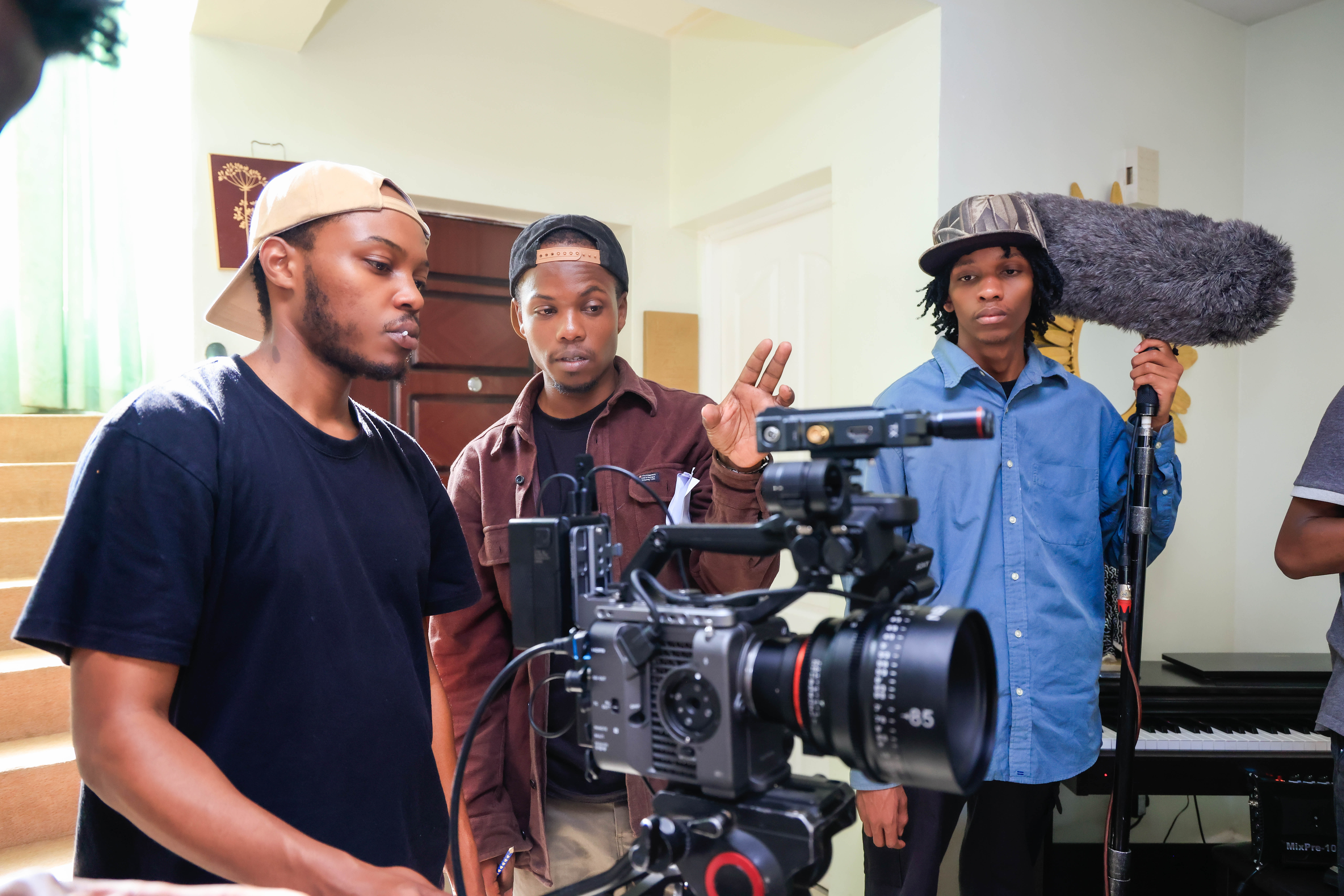
ADMI's Film and Television Production Diploma is a two-year, ECTS-accredited programme (through Woolf with ECTS credits) that teaches the foundations AI can't replace: directing, cinematography, screenwriting, sound design, and post-production workflow. Students work with digital cinema cameras from Sony, ARRI, and RED, plus DaVinci Resolve and industry-standard equipment — learning both the craft and the tools.
Eight ADMI graduates worked on Watu Wote, the Kenyan film nominated for Best Live Action Short at the 2018 Academy Awards. That kind of recognition doesn't come from AI prompts — it comes from deep craft and authentic storytelling.
Kenya's Film Industry Is Booming — AI Makes the Timing Perfect
Kenya's creative economy is growing fast. Netflix selected ADMI as the only vocational institution (alongside four universities) for its $1 million Creative Equity Scholarship Fund. The Kenya Film Commission is actively supporting local productions. Broadcasters including NTV, Citizen TV, and KTN are hungry for original Kenyan content. Showmax, Amazon Prime, and international platforms are investing in African stories.
AI tools mean a small Kenyan production team can now achieve visual quality that previously required Hollywood budgets. A three-person crew with AI-assisted post-production can deliver work that competes with larger studios. For the Kenyan film industry, AI isn't a threat — it's the great equaliser.
"I believe that people in Hollywood are not the only ones who can make good films," says Claire Njoki, an ADMI graduate who worked on the Oscar-nominated Watu Wote. And with AI tools, the gap between Nairobi and Los Angeles is narrower than it's ever been.
The AI Tools Every Film Student Should Know
You don't need to be a programmer. These tools are designed for creatives, not engineers.
Runway ML is used for video generation, inpainting (removing objects from footage), and motion tracking. It's become the go-to tool for concept visualisation and VFX prototyping. DaVinci Resolve embeds AI across its entire workflow — from Magic Mask for subject isolation to voice isolation for cleaning dialogue in noisy environments. Adobe Firefly generates images and textures directly inside Photoshop and After Effects, useful for set design mockups and title sequences. Higgsfield generates video from text descriptions, increasingly used for pre-visualisation and pitch materials. Topaz Video AI upscales low-resolution footage and removes noise — a lifesaver when working with older archive footage or budget cameras.
The pattern across all of these? They accelerate execution but require creative direction. An AI tool without a trained filmmaker is like a cinema camera without a cinematographer — expensive hardware doing nothing.
Frequently Asked Questions
Will AI replace film directors and cinematographers?
No. AI handles repetitive technical tasks — colour matching, noise removal, transcription — but directing, visual storytelling, and managing live production are deeply human skills. The best filmmakers will use AI to work faster, not be replaced by it.
Is film school still worth it in the age of AI?
More than ever. When everyone has access to AI tools, the differentiator is craft — understanding narrative structure, camera language, and production management. Film school teaches the foundations that make AI tools useful rather than just flashy.
What AI filmmaking tools should beginners learn first?
Start with DaVinci Resolve — it's free and has powerful AI features built in. Then explore Runway ML for video generation and Adobe Firefly for image creation. Focus on understanding what these tools produce before relying on them creatively.
How is AI changing the Kenyan film industry?
AI is levelling the playing field. Small Kenyan production teams can now achieve visual quality that previously required large budgets. AI-powered noise removal, colour grading, and pre-visualisation tools mean productions for NTV, Citizen TV, and streaming platforms can be completed faster and at higher quality.
Does ADMI teach AI tools in its film programme?
ADMI's Film and Television Production Diploma includes DaVinci Resolve and industry-standard post-production tools. The programme is ECTS-accredited through Woolf, runs for two years, and the next intakes are May 2026 and September 2026.
Ready to Future-Proof Your Film Career?
The filmmakers who thrive in 2026 and beyond won't be the ones who fear AI. They'll be the ones who learned the craft first, then used AI to amplify it.
ADMI's Film and Television Production Diploma gives you two years of intensive, hands-on training in directing, cinematography, screenwriting, and post-production — with ECTS-accredited ECTS credits through Woolf. Over 3,000 creatives have trained at ADMI since 2012, with an 85% graduate employment rate through the Microsoft AppFactory programme.
Next intakes: May 2026 and September 2026. Apply now or request a prospectus to learn more about the programme. You can also explore our Film & Television Production Diploma page for the full curriculum.