logo-01.8315cd3f.png&w=256&q=75)
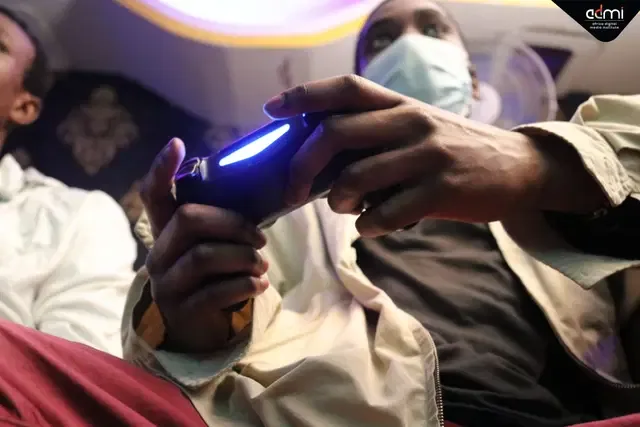
Although video games are best known for their entertainment value, they can also be used for exercise or education. Some businesses are even using game mechanics to drive engagement and influence consumer behaviour.
The video game industry has become a billion-dollar business and the number of active video gamers is expected to rise to 2.7 billion, worldwide, by 2021. So if you’re wondering what game design is and how you can have a share of this thriving market, your curiosity is well-placed.
Wikipedia defines video game design as:
“The process of designing the content and rules of video games in the pre-production stage and the gameplay, environment, storyline, and characters in the production stage.”
TechTarget breaks down the game design process into 3 components – conception, planning and directing as shown in the definition below.
“Video game design is the process of conceiving, planning and directing the creation of an electronic game in which players control images on an electronic display.”
So video game design involves 2 core stages:
Pre-production
Production
The 2 Stages of Video Game Design
The Pre Production Stage of Video Game Design
Let’s imagine for a moment that you’re a game designer in a gaming company such as Nintendo or Sony and you’ve come up with a great video game idea. First, create a game design document, also known as a GDD.
You will present this document to the rest of the team which is made up of playtesters, developers, programmers, level designers, sound engineers and artists.
In the GDD, you’ll describe your artistic direction and design goals. You’ll also demonstrate the team’s ability to execute the project with the time and resources available.
A game design document also includes:
The game concept:
Give a synopsis of the story and decide on a genre (adventure, strategy, sports, RPG, etc). Determine what interface will be used as well as the concept and style of the game. Describe the chapters, levels, maps, sound effects, music and characters. What emotions will players bring out as they play? Will it be fun to play?
The target market:
Identifying your demographic guides the development and marketing teams during production and post-production. It makes it easier for the development team to add the most relevant features and enables your marketers to promote the game once it’s published. For instance, the mechanics and systems of a game meant for a 13-year-old would be different from that of a 25-year-old. The older the demographic, the more complex the game will be. Games meant for children typically incorporate colourful visuals and simple controls. So determine your target market and what expectations they’d have for a game like yours.
Central gameplay mechanic:
Describe how the players will interact with the game and with each other. How will they measure their progress? Is it single-player or multiplayer? Is it in the first or third person? What system will deliver the best experience to the players? Your
is a premise on which you build your project. For example, Minecraft’s gameplay is
‘Stack different blocks in a blocky 3D world.’
So all design ideas are tested against this gameplay premise.
users have a choice to play in creative or survival mode and even customize their experience with add-ons.
Game design pillars:
These are one-sentence statements that define your game’s core principles. Your team must refer to these pillars when designing the levels, systems and other game components. Core pillars such as
‘intellectually challenging’, ‘gives players a sense of accomplishment,’ ‘encourages players to explore’
or
‘strong role-playing experiences’
are great examples.
Project schedule:
Assign time estimates to each task and ensure that your whole team is on board with the schedule. Remember to factor in sick days, time off and unexpected delays. A timeline will enable you to know how long the team will work on each feature so you can remove those that are time-consuming from the game.
Budget estimates:
Determine how much time and money you’d like to spend on your game project. Changes, bugs and other unknowns can push the publishing date further than you anticipated. Make a realistic budget so that you won’t have to lay off people during production. If you plan to publish your game in a year, adjust your budget to meet your expenses for an additional 3 months.
A game design document keeps everyone focused on the task at hand. Since the game design team is made up of creatives, it’s common for the project to experience feature creep. This is a situation where new features and ideas are introduced mid-development which makes it difficult for the programmer to manage their code.
Although creative ideas are welcome during pre-production and development, the team must constantly refer to the GDD so as to stay on schedule. The last thing you need is to prolong your development time. What started as a great idea will start to wear the team down and may result in an unfinished project.
The GDD is also useful to the marketing team. They can find all the features, themes and concept artwork to create press releases, screenshots and trailers when you publish the game.
Once the team decides to go forward with the idea, the development team will use the GDD to create a game prototype as proof of concept. Building a prototype allows the team to work on game mechanics and test the idea before jumping right into the project. One of the core lessons that our game design students take is how to create a GDD and pitch their video game.
It will also demonstrate why this project will translate into a fun game and the basic features that will accompany it. So make sure that the mechanics, storytelling and user experience are an accurate representation of the game and gather as much feedback as you can at this stage.
The pre-production stage typically lasts between 6-8 weeks.
The Production Stage of Video Game Design
All the action begins at this stage. Programmers write the source code and artists create assets such as 3D models and sprites. Designers build levels while writers script dialogues for characters and cutscenes.
Voice actors then take up the script and record until they find the right take. The audio design team will compose the right music and sound effects so that the characters sound authentic with every move they make.
It’s the game designer’s role to oversee the production process. A game designer is to gaming what a director is to filming. He keeps the team members on schedule and on budget, making sure no one deviates from the vision and GDD.
Once the game has been developed, each feature is tested. Quality control enables the playtester to identify bugs, design flaws, scripting loopholes and rendering problems. The team then goes back to fix bugs and polish the game before releasing it to the public.
How Can I Learn Game Design?
Game design is a highly creative process, so an eye for art and a genuine interest in video games is a great place to start.
Next, find a school that offers practical teaching. At ADMI, you’ll have a dedicated workspace throughout your study. Our students are taught by lecturers from both ADMI and Rubika – Europe’s leading animation and game design school.
Finally, reach out to the school’s admissions counsellors for a visit to campus. Inspect the game design lab that you’ll be using once you enrol and ask questions about the course. This will help you make the right decision as you plan to enter this fast-growing industry.
Take the first step in your game design career journey. Sign up for the next intake here.