logo-01.8315cd3f.png&w=256&q=75)
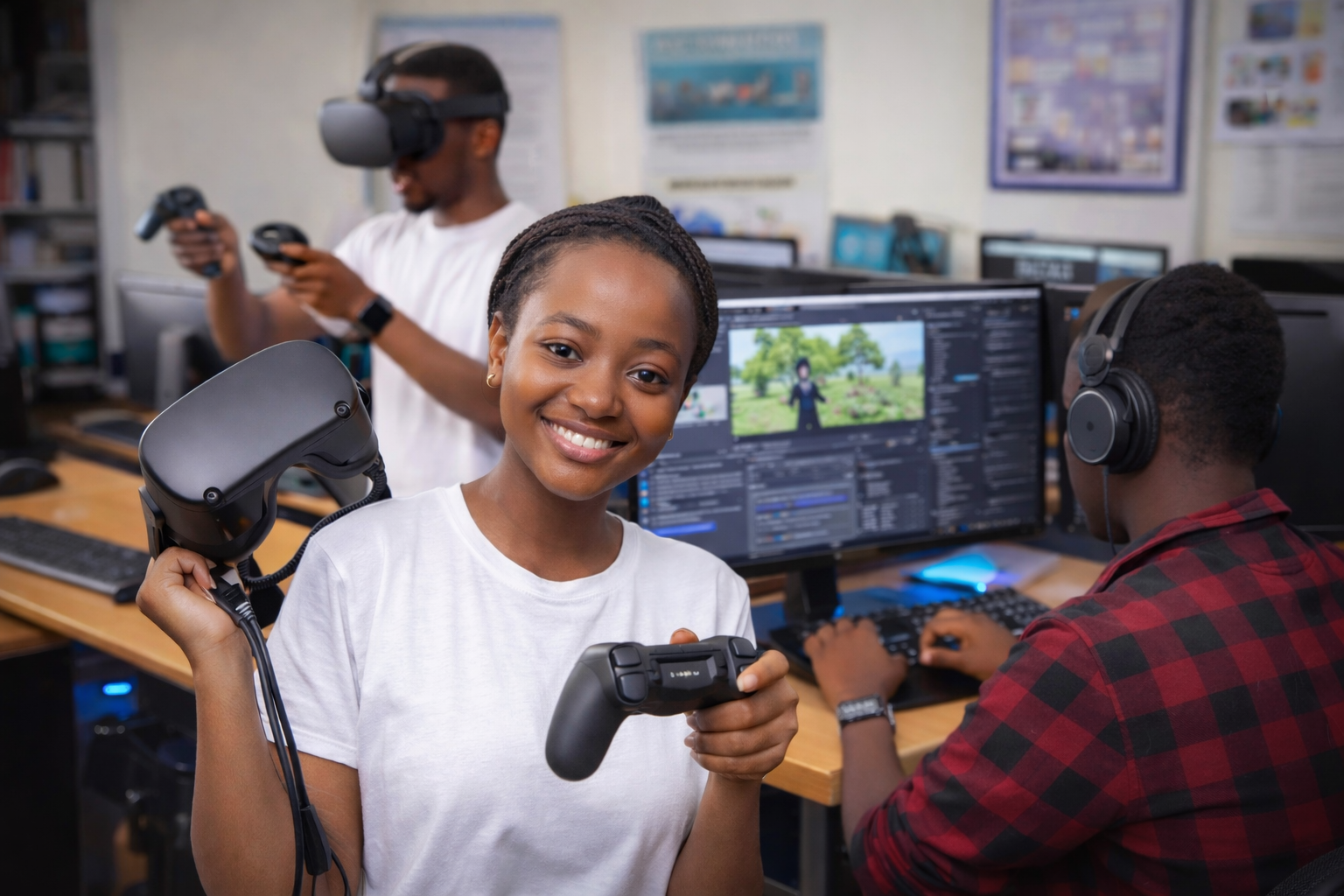
Not long ago, virtual reality felt like something reserved for gaming consoles and global tech giants. Today, it’s quietly reshaping how Africans learn, tell stories, preserve culture, and train future professionals. From classrooms and museums to corporate training rooms, immersive experiences are becoming a powerful new way to engage audiences, and skilled creators are at the centre of this shift.
At the Africa Digital Media Institute (ADMI), students are learning how to turn curiosity about VR into practical, career-ready skills through structured training in game development and immersive media.
Why Virtual Reality Matters—Especially Now
Virtual reality allows people to step inside experiences rather than just watch them. A student can explore historical sites without travelling. A trainee can practise real-world scenarios in a safe environment. A brand can tell its story in a way that feels personal and unforgettable.
Across Africa, institutions in education, heritage, marketing, and corporate training are beginning to adopt VR because it improves engagement and learning outcomes. As access to mobile and standalone headsets grows, so does the demand for creators who can design, build, and deploy immersive content responsibly and effectively.
This is where skills—not hype—make the difference.
What Learning VR Content Creation Really Involves
Creating meaningful VR experiences is not about shortcuts or flashy tools. It’s about understanding how technology, storytelling, and user experience come together.
In a structured learning environment, students focus on:
The foundations of VR and immersive media
360-degree video capture and editing
Spatial audio and how sound guides attention in virtual spaces
Building interactive scenes using game engines such as Unity and Unreal
Designing experiences that work on mobile and standalone headsets
Following a clear production pipeline from idea to deployment
These skills are practical, measurable, and transferable across industries.
Starting Small: What Beginners Can Do First
Many aspiring creators worry they need expensive equipment to begin. In reality, learning starts with simple steps:
Understanding basic VR concepts and safety principles
Capturing a short 360-degree environment using entry-level tools
Learning how to stitch, edit, and prepare footage for VR viewing
Experimenting with sound placement to enhance immersion
Exploring simple interactive scenes inside a game engine
These early experiments build confidence—but they also reveal limits.
The Reality Check: Why Self-Learning Isn’t Always Enough
Online tutorials can help you experiment, but professional VR work demands more. Beginners often struggle with:
Poor stitching and visible seams in 360 footage
Flat or confusing audio that breaks immersion
Performance issues that cause discomfort for users
Weak interaction design that feels more like video than VR
Without feedback, structure, and real project deadlines, many learners stall at the prototype stage.
What Professionals in Immersive Media Must Master
Industry-ready VR creators understand more than tools. They know how to:
Optimise scenes for performance on real devices
Design interactions that feel natural and comfortable
Balance storytelling with user freedom
Work collaboratively using proper production pipelines
Test experiences with real users and refine them
These are the skills employers and clients look for—and they take guided practice to develop.
Common Beginner Mistakes (and How Training Helps Avoid Them)
New VR creators often:
Treat VR like traditional film instead of an interactive medium
Ignore spatial audio and its impact on realism
Overload scenes, causing lag or motion discomfort
Design movement systems that make users feel unwell
Structured training helps students learn best practices early, saving time, frustration, and lost opportunities.
Where These Skills Can Take You
Virtual reality skills open doors to a range of creative and technical roles, including:
VR Developer
Immersive Media Creator
360 Video Producer
VR Experience or Interaction Designer
Graduates may work with schools, museums, creative agencies, tech startups, NGOs, or build freelance careers delivering immersive projects for local and international clients.
The ADMI Advantage: Learning That Connects to the Real World
At ADMI, training is designed to bridge the gap between learning and work. Students benefit from:
A structured curriculum grounded in industry practice
Access to modern production tools and facilities
Instructors with real-world creative and technical experience
Project-based learning that builds a strong portfolio
Career guidance and industry exposure
The goal isn’t just to teach software, it’s to develop confident creators who understand how their skills fit into real industries.
Course Spotlight: Video Game Development at ADMI
ADMI’s Video Game Development course is a strong pathway for students interested in VR and immersive content creation. The programme introduces learners to:
Game engines used in VR production
Interactive design principles
Asset optimisation and performance basics
Real-world production workflows and teamwork
Students graduate with practical projects that demonstrate their ability to design and build interactive digital experiences—skills that translate directly into immersive media roles.
A Clear Next Step for Students and Parents
For students passionate about technology, storytelling, and creativity—or parents seeking future-ready career paths for their children—immersive media offers a compelling option. It blends creativity with technical skill, and imagination with employability.
If you’re ready to move from curiosity to capability, from experimentation to professional skills, this is your moment. Apply to ADMI, build real projects, and start shaping the immersive experiences of tomorrow.
The future isn’t just something you watch—it’s something you build. Start building it at ADMI. Jan 2026 applications are open.